
A real golf swing training day looks nothing like what most amateurs think it does. The version I prescribe as a coach runs about 60 to 75 minutes total and breaks into four blocks: a 10-minute mobility warm-up, a 15-minute focused drill block on one specific feel, a 30-minute random-practice block hitting the actual shots they'd face on the course, and a 10-minute speed-training block to build clubhead speed without compromising sequence. No mindless ball-beating. No grinding the same swing fault for an hour. The structure is what makes the work transfer to scoring.
This guide walks through what each block looks like in practice, what equipment matters (and what doesn't), how often per week to train, and how to adjust the routine and the training schedule for in-season versus off-season weeks. I'll also share the workout and golf fitness routine I have my own students do on non-range days to keep the body ready for the swing, plus the small handful of cues I use to help any golfer improve your swing without overhauling the whole motion.

Why most amateurs train wrong
Here's the pattern I see at every driving range I visit: a player walks up, dumps a bucket of balls on the mat, grabs a 7-iron, and hits 60 of them in 30 minutes with no specific target and no rest between swings. They feel productive. They are not. Golf.com's coverage of the random-versus-blocked practice research summarizes the motor-learning studies showing that this kind of repetitive blocked practice doesn't transfer to the course or improve your golf game the way amateurs assume it does, no matter the handicap.
The reason: the brain learns differently when shots vary. On the course, you never hit the same shot twice in a row. The same 7-iron at the same target with the same lie comes up maybe once a round. So practicing only that scenario teaches a skill that doesn't show up when scores matter. A structured training day fixes this by mixing block and random work in the right proportions.
Block 1: Mobility warm-up (10 minutes)
Most amateurs skip the warm-up. The pros never do. Ten minutes of targeted mobility work before any swing reduces injury risk in the joints and opens up the range of motion the swing demands. The routine I use with my players: 90/90 hip rotations for 2 minutes (open the hip joint), thoracic spine rotation for 2 minutes (lets the upper body turn freely), shoulder dislocations with a band for 2 minutes (loosen the upper body), bodyweight squats with a pause at the bottom for 2 minutes (wake up the lower body and the big muscle groups around the glutes), and slow practice swings starting at 50 percent for 2 minutes. Even a beginner can run this same sequence; it scales with whatever range of motion the body has on the day.
The signal that the warm-up is working: by the end of those ten minutes, your first practice swing should feel loose, not stiff. If you're still feeling tight, give it another two minutes. The single best predictor of a good range session is whether the body is properly prepared before the first real swing. Skipping this step is the fastest way to ingrain a compensation pattern into your swing and to set yourself up to lose ball speed because the lower body never fully wakes up.
Block 2: Focused drill work (15 minutes)
This is where you fix things. Pick one specific feel you're trying to ingrain and run a drill that targets it for 15 minutes straight. Some examples I rotate with my own players: pause-at-the-top for timing, half-swings for sequence, feet-together for balance, alignment-stick work for path. One drill. One focus. No more.
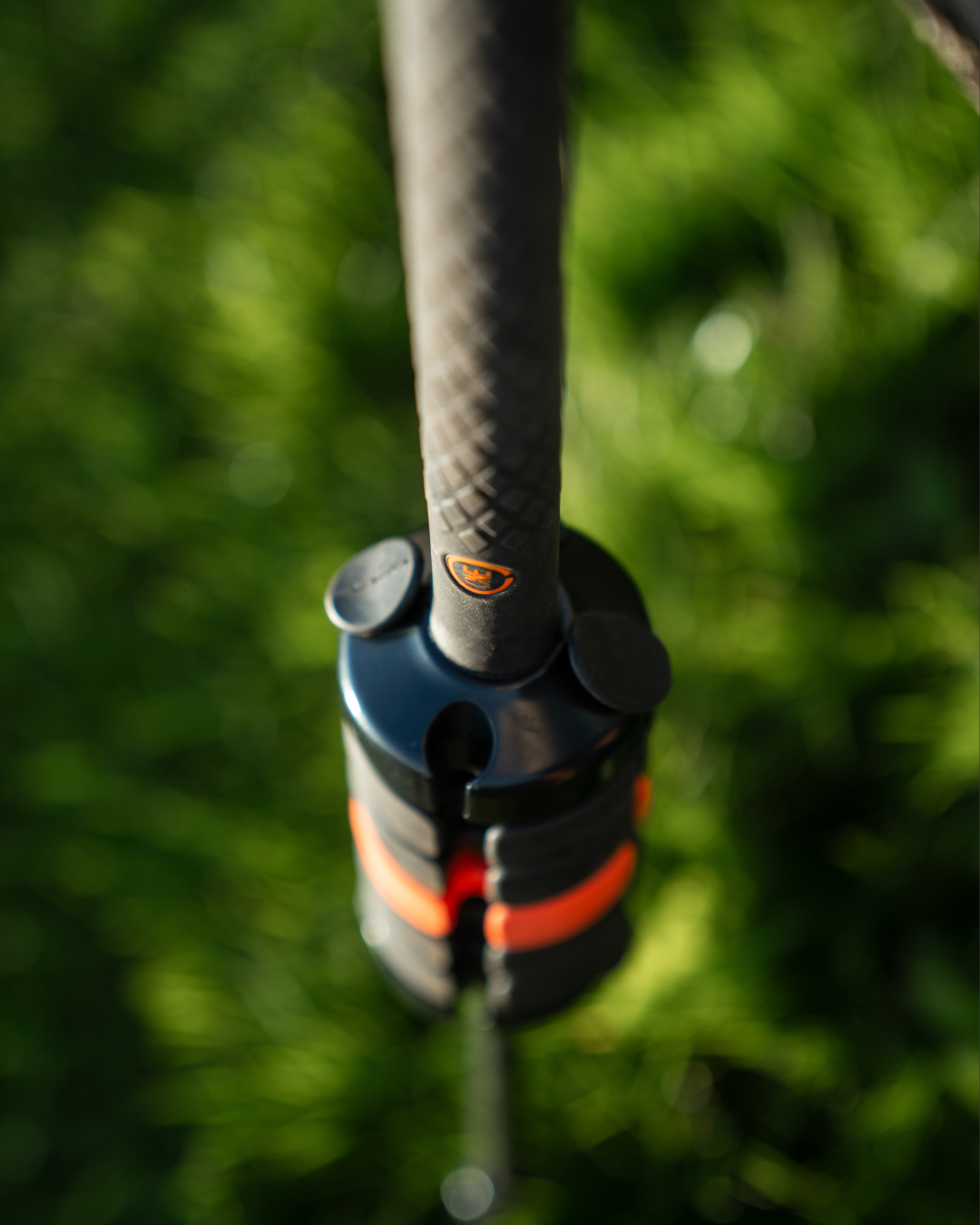
The trap most amateurs fall into: they try to fix three things at once and end up fixing none of them. The brain can only ingrain one motor pattern at a time. A 15-minute block on a single feel beats an hour on five different feels, every single time. This block is also where weighted swing trainers earn their keep, especially during a backswing or downswing rotation drill where ball striking and tempo both depend on a clean transition. A tool like the ONE Club Trainer adds load to the swing, which forces the body to commit to whatever pattern you're trying to groove. I keep one on my lesson tee for exactly this block. If a launch monitor is handy, set it next to the mat and watch the numbers settle as the new pattern locks in.
Block 3: Random practice (30 minutes)
This is the longest block and the one that actually transfers to scoring. The setup: pick three to five clubs you'd typically use on a round (driver, 7-iron, pitching wedge, sand wedge, hybrid) and rotate through them, hitting one shot at a time with a different target for each. No two consecutive shots the same, no repeats with the same club back-to-back.
To make it more course-like, run through an actual hole in your head before each shot. "This is the 4th at my home course, second shot into a back-right pin, 150 yards, slight breeze." Then hit the shot. Hit it once. Move to the next club. The training day should mirror the real-life decisions, not just the swings.
The other thing I do: include a couple of "trouble" shots in this block. A punch out from under trees with a lower club than you'd normally pick. A high cut around a corner. A bump-and-run from short grass where the ball never gets more than two feet off the ground. These show up on the course constantly and almost never get practiced. Add them in and your scrambling improves fast, because the brain learns to pair a club selection with a ball flight under pressure.
Block 4: Speed training (10 minutes)
Speed training is the most overlooked block in the typical amateur range session. Done correctly, it adds 3 to 7 mph of clubhead speed over a season, which translates to 8 to 15 yards off the tee. PGA Tour players like Bryson DeChambeau built entire off-seasons around it, and the protocol most coaches I trust use is simple: a few sets of three swings each, where one swing is at 80 percent effort, the second at 95 percent, and the third at maximum effort, with a rest of 30 seconds between sets. The neuromuscular response is what builds swing speed, not the volume of reps you grind out.
The catch is that pure speed work without resistance feedback can groom bad mechanics. The body learns whatever it does fastest. So pair speed training with a weighted tool that provides instant feedback when the sequence breaks down. SuperSpeed's overload-underload research outlines the principle. Most weighted-trainer protocols (ONE Club Trainer included) work on the same idea: overload the system so the body learns to fire harder, while keeping sequence intact.
What a typical training week looks like
Three range days a week is the sweet spot for most amateurs. More than four sessions usually crosses into diminishing returns, because the body needs time to integrate the new motor patterns. My standard prescription:
Day 1 (Monday): Full session. All four blocks, 65 minutes. Pick the drill block based on whatever was breaking down the previous weekend.
Day 2 (Wednesday): Drills + short game. Skip the random-practice block and add 30 minutes of short-game work, mostly chip shots and putting. This is where amateurs leave the most strokes on the table, and a focused 30 minutes on chip distance control will move a handicap faster than another hour of full-swing reps.
Day 3 (Friday): Full session. Same structure as Monday, but rotate the drill focus to something different.
On non-range days, 20 minutes of functional fitness and strength training work at home keeps the body ready for the demands the swing puts on the muscle groups it loads up. Bodyweight squats for the lower body, glute bridges for hip stability, jump squats for explosive power, plank variations for core stability, band rows for upper body strength, and a rotational med-ball throw or two for the obliques and the muscle chain a golfer fires on every drive. Three rounds of 8 to 12 reps per exercise, progressing the load over time, and a golfer will get stronger without needing a gym. Fit for Golf's training framework covers this side in depth and is one of the cleanest free resources for a golf-specific training plan a coach can point a student to. The progression matters: small, consistent gains over months beat occasional heavy gym sessions every time, and the strength training stays specific to the swing rather than turning into a generic bodybuilding program.

Off-season versus in-season adjustments
In-season (April through October for most US players), the training day emphasizes maintenance: the four-block structure stays, but the drill block focuses on whatever swing fault showed up most recently on the course. Swing speed training drops to once a week through the heart of the golf season to avoid fatigue compounding while you're still trying to compete on weekends.
Off-season (November through March) flips the priority. The drill block can get more aggressive because there's no upcoming tournament to protect the swing for. Speed training with a weighted club ramps up to twice a week, and the fitness side gets more time, since players can build strength and mobility without worrying about competing in the same week. A short strength training program of three full-body sessions a week stacks well on top of two range days. Eight weeks of off-season speed work, done right, produces the 3 to 7 mph speed gains I mentioned earlier almost universally. The other off-season opportunity I push every golfer toward: tighten up the parts of the swing you know are weak. Lead-wrist mechanics, hip rotation, balance through the finish. Pick one fault per month, drill it 15 minutes a day, and you walk into spring with a different golf swing.
Golf swing training routine questions
How long should a golf swing training day be?
Sixty to 75 minutes is the sweet spot for most amateurs. Less than that and the random-practice block gets shortchanged. More than that and fatigue starts to introduce new errors. The structure matters more than the total minutes.
How often per week should I train my swing?
Three sessions a week beats five for most amateurs. Two of the three should be full range sessions with all four blocks; one can be a shorter drill plus short-game day. Add 20 minutes of fitness work on non-range days and you have a complete program.
What's the 80/20 rule in golf training?
Roughly 20 percent of your training produces 80 percent of the improvement. For most amateurs, that 20 percent is short-game work, tempo drills, and lower-body fitness. Train those three and you cover the bulk of what limits a typical swing.
What is the best exercise to improve a golf swing?
For pure swing-speed gain, rotational medicine-ball throws and Romanian deadlifts produce the biggest returns. For consistency under fatigue, side planks and goblet squats are hard to beat. Mix both kinds of work into your training program and you address both speed and durability at the same time.