
Learning how to hit a golf ball further is not just a driver problem, and that is the first thing I tell my students when they walk onto the lesson tee asking for more yards. Distance is a habit you build into every club in the bag, from the 460cc driver down to the 35-inch putter. The players who pick up 20 yards off the tee almost always pick up a club length with their 7 iron, three or four feet of carry with their 56 degree wedge, and a firmer roll on a 30-foot lag putt. From years on the lesson tee, I watch amateurs leave half their potential on the mat because they treat the driver as a separate sport. It is not. Distance is a system.
This article walks through how to hit the golf ball farther with every category in your bag. We will work top down, starting with the woods and hybrids, moving into the long irons, mid irons and wedges, and finishing with the putter, because yes, putter distance matters too. Along the way I share the drills, the equipment notes, and the small mechanical tweaks I use with players at the range.
Why most amateurs lose distance with every club
The shortest answer is they swing the same way with every club and they swing with their arms. When I put a new player on a launch monitor, the pattern is identical. Clubhead speed is fine in the first half of the downswing, then the wrists flip, the lead shoulder pulls up, and the club face arrives open. They lose 15 mph of ball speed between the 7 iron and the driver because the mistake gets amplified by the longer lever.
The fix is not swinging harder. Swinging harder means tighter forearms, and tight forearms kill clubhead speed faster than anything else in the golf swing. I want a smooth tempo on the way back and a fully sequenced release on the way down. According to TrackMan's swing-data archive, the difference between a scratch player and a 15 handicap is rarely about effort. It is sequencing, contact, and angle of attack, whether you hold a driver or a 5 iron.
How to hit the golf ball further with a driver
To hit the driver farther, tee the ball higher, widen your stance about two inches past shoulder width, and present the club face on a slight ascending arc through impact. That is the headline. Most amateurs I see tee the ball too low, set up too narrow, and chop down on the driver as if it were a 9 iron, which spikes spin and bleeds distance. A positive attack angle of three to five degrees up adds carry without adding any swing speed at all.
I like to see the equator of the ball level with the top edge of the driver crown at address. The lead foot flares 25 degrees. The lead shoulder climbs while the trail shoulder works under and through. If you have not been fitted, get fitted. Golf Monthly calls a launch monitor session the highest return-on-time hour an amateur can spend. The shaft, the loft, the ball model, and the grip thickness will all alter how far the club much travels and how fast the club head can release.
Fairway woods and hybrids, where most distance is hiding
Fairway woods are not driver number two. To get more distance with a 3 wood off the deck, narrow your stance about an inch from your driver setup, play the ball one ball forward of center, and try to clip the ball off the top of the grass rather than digging. The angle of attack you want here is barely descending or level. Hybrids work the same way. They were designed to be played like long irons but with the forgiveness of a small fairway wood, which is exactly how they gain you yards.
I tell my students to think of the hybrid as a 5 iron that does not punish a heel strike. Hitting the center of the club face matters more with these clubs, because the sweet spot is shallow and the head twists if you miss it. A common mistake I fix is a player swinging a hybrid like a fairway wood, with a sweeping arc and a long backswing, thinning shots into the front bunker. Shorten the takeaway by six inches. Trust the loft. The ball flies higher and longer.
How to hit the golf ball further with irons
For the irons, distance comes from compression. You hit down to make the ball go up, and you let the loft of the club do the lifting. The image I give players is that the club head should be travelling forward, down, and inward at impact, with the hands slightly ahead of the ball and the shaft leaning toward the target. That shaft lean delofts a 7 iron from 34 degrees to about 29 degrees at impact, which is why a tour player hits a 7 iron 180 yards and the average amateur hits the same club 140.
The drill I run for this is the towel drill. Place a folded towel six inches behind the ball. If you catch the towel first, your low point is behind the ball and you are scooping. If you strike the ball first, your low point is forward, which is what you want. HackMotion's wrist-data research shows that flexion in the lead wrist at impact is a consistent marker of an iron compressor. If your lead wrist is cupped, you lose distance no matter how hard you swing.
Long irons and the 5 iron problem
The 5 iron is where amateur distance goes to die. A 5 iron has 27 degrees of loft and a 38 inch shaft, which is too little loft and too long a shaft for most recreational players to deliver consistently. To hit a 5 iron farther, you do not actually swing harder. You stand a half inch closer, you grip a touch lighter, and you let the club do its job. The lighter grip pressure, somewhere around a four out of ten, allows the wrists to hinge and unhinge freely, which is where late-stage clubhead speed lives.
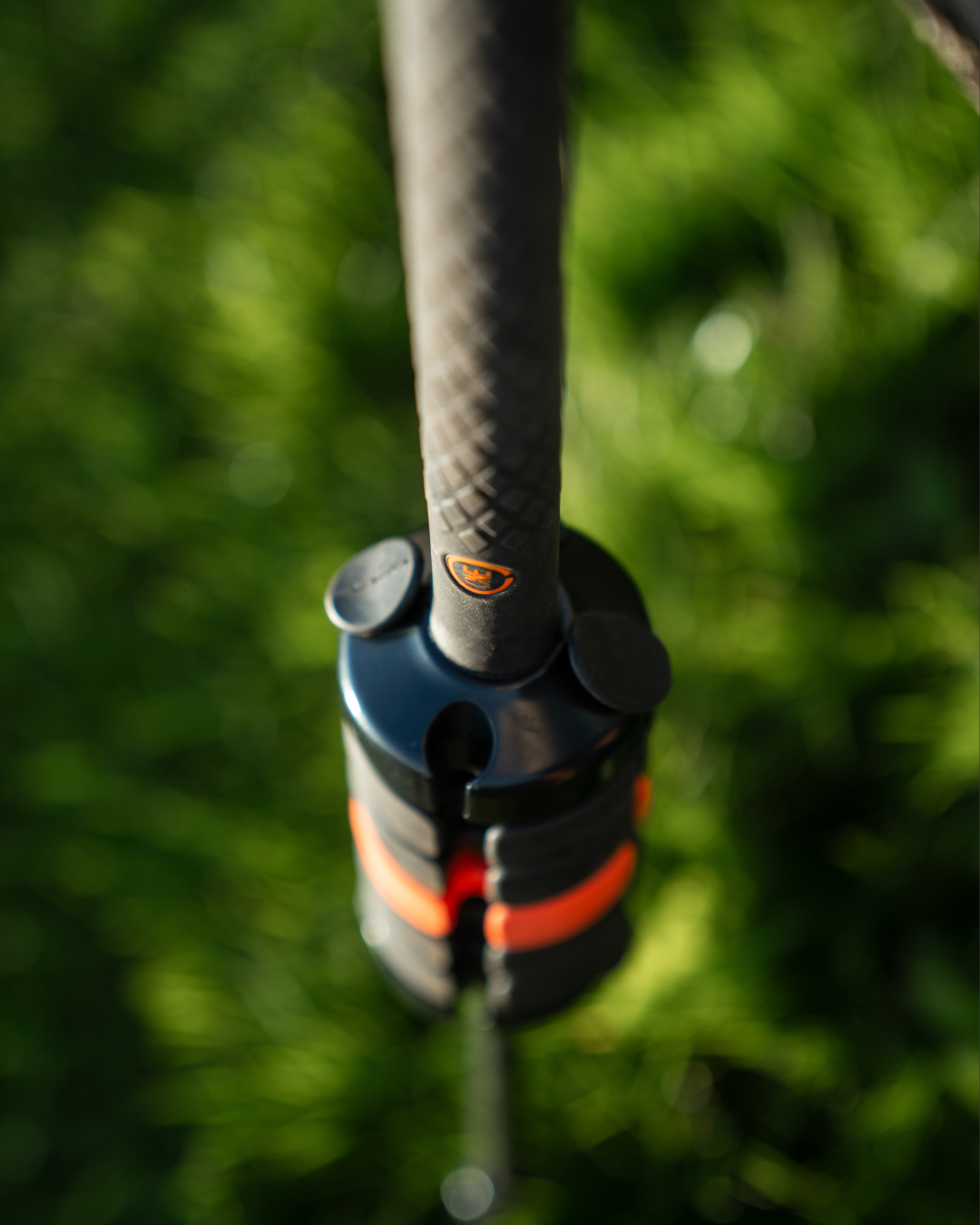
For players who struggle with the 5 iron, I recommend swapping it for a 4 hybrid. There is no shame in this. You generate more ball speed with a forgiving long club, and you carry the ball higher, which means more total distance. A weighted swing trainer like the ONE Club Trainer is useful here, because the added load forces you to sequence the hips and shoulders rather than muscle the long iron through impact.
Mid irons, wedges, and the math of partial swings
Distance with the mid irons (6, 7, 8) is about clubface control more than raw speed. To hit a 7 iron farther, focus on hitting the center of the club face, not the toe and not the heel. A center strike on a modern cavity-back iron produces around 6 to 9 yards more carry than a strike a half-inch off center. I have seen players gain a club just by stepping back from the ball by an inch and standing taller at address, because suddenly they stop reaching and start delivering the sweet spot.
Wedges are a different game. You do not want maximum distance from a 56 degree wedge. You want predictable distance, which means knowing your full, three-quarter, and half swing yardages within five yards each. Once you know those numbers, you add distance by adding spin, because high-spin shots check on the second bounce rather than rolling 15 yards past the pin. To generate more spin, brush the grass with the leading edge, keep the hands ahead, and accelerate through impact. According to Titleist Performance Institute's research, rotational power from the hips and torso allows you to accelerate the club head without flipping the wrists. Wedges punish flippers worst.
The putter, because distance matters here too
Half of three-putts come from poor speed, not poor line, which is why putter distance matters as much as driver distance over the course of an 18-hole round. To hit your putts farther, lengthen your stroke rather than hitting harder. A pendulum stroke that is six inches back and six inches through will roll a ball roughly 20 feet on a stimp 10 green. If you want 30 feet, you go to a nine inch backstroke. If you want 40, you go to twelve. The tempo stays identical. Only the length changes.
I drill this with a ladder. Pick a flat stretch of green, drop tees at 10, 20, 30, and 40 feet, and roll three balls to each. Most amateurs leave the 40 footer short because they decelerate. The cure is a longer backstroke and a putter that swings through. Mark Broadie's strokes-gained research shows lag putting from 30 to 50 feet is one of the biggest separators between low and mid handicaps. You will not hole more 40 footers, but you will eliminate a stack of three-putts a season just by rolling the ball the right distance.
How clubhead speed actually grows
Clubhead speed is the engine behind everything I have just described. You build it three ways: get stronger in the right places, train the body to move faster, and let the swing get longer where it matters. Stronger means hip and core rotational strength, not bench press strength. Medicine ball throws and cable rotations transfer best to swing speed.
Faster means overspeed training. Swinging a club lighter than your driver, two or three times a week, retrains your nervous system to fire quicker. SuperSpeed Golf has built an entire system around this principle, and amateurs routinely add 5 to 8 mph of clubhead speed in a six week protocol. Longer means a fuller shoulder turn. I want to see the lead shoulder reach the chin at the top, with the trail hip loaded and the wrists fully hinged. A short backswing is the most common reason amateurs are slower than they should be, especially as they get older and tighter in the thoracic spine. The ONE Club Trainer makes the longer arc easier to feel because the weight cues you to complete the backswing rather than rushing the transition.
Equipment, ball flight, and the cheapest yards in golf
The cheapest yards in golf come from equipment that fits you. A driver shaft too stiff for your swing speed will spray the ball and rob you of carry. A ball too firm for your speed will spin low off the irons and balloon off the driver. New grips alone, replaced once a year, restore the grip pressure you used to feel. Ball selection belongs in the top ten of any distance conversation. Tee height matters too. A 3 wood off a par 3 tee box, teed just barely above the turf, gives cleaner contact and higher launch. Small stuff. Real yards.
A weekly practice plan that actually adds distance
Distance is built, not bought. Most players at the range practice the wrong thing for the wrong amount of time. Here is the plan I give my own students. Twice a week, do 20 minutes of overspeed work with a light club, focusing on smooth tempo back and a fast release through. Twice a week, do strength work centered on rotational power, deadlifts, and single leg balance. Once a week, hit balls with a specific goal, like 20 7 irons that all land within a 10-yard window, because distance without direction is just a longer slice.
Once a month, get on a launch monitor. The number you care about is smash factor, which is ball speed divided by clubhead speed. A smash factor of 1.50 with the driver is excellent. Anything under 1.40 means you are losing distance on contact, not on speed. Fix the contact and you will gain 10 yards before you swing one mph faster.
How to hit a golf ball further questions
Why am I not hitting the golf ball very far?
The most common reason amateurs do not hit it far is poor contact combined with poor sequencing. The club face arrives open, the low point is behind the ball, and the wrists flip at impact. Fix the strike first. Distance follows.
How do I add 20 yards to my drive?
Tee the ball higher, set up with a wider stance, present a positive angle of attack, and get fitted for a shaft that matches your swing speed. Add an overspeed routine twice a week. Most golfers find 15 to 25 yards from those four changes inside a season.
Is golf good for spinal stenosis?
Golf can be played with spinal stenosis, but the rotation involved makes it important to work with a physiotherapist or a TPI certified coach. A shorter backswing, a more upright posture, and a focus on hip rotation rather than spinal twist will reduce load. Always check with your doctor before resuming play.
How can I hit the golf ball farther without swinging harder?
Improve your contact and your sequence. A center strike with proper shaft lean delivers more ball speed than a mis-hit with maximum effort. Strengthen the hips, train the wrists to release on time, and stop trying to muscle the club.
How far should I be hitting each club?
An average male amateur with a 90 mph driver swing speed should expect 220 yards off the tee, 175 with a 5 iron, 150 with a 7 iron, and 100 with a pitching wedge. Tour players hit each club 30 to 40 yards farther, mostly a function of speed and contact.