
To increase your speed in the golf swing, a golfer has to address three physical systems: mobility (how much range of motion the body can use), strength (how much force the muscles can generate), and overspeed (how fast the nervous system can recruit that strength). Gains in any one of the three add speed. Gains in all three stack on each other. Many golfers only work on one (usually strength) and wonder why their clubhead speed stalls. Speed training that hits the whole system, paired with practice and technique work on the range, produces real results. A typical amateur who runs the full program for 12 weeks adds 5 to 10 mph of clubhead speed. That is 15 to 25 yards off the tee with the driver, longer drives that hit the ball past the usual layup, and 8 to 12 more yards with mid irons. Exercise choice inside each phase matters as much as the volume.
This guide breaks down each of the three systems in detail. We will cover what limits each one, the drills and exercises that fix it, how to track progress, and how to fit them into a weekly workout that works for an amateur's schedule. It closes with the gear that actually matters and the questions golfers ask most about speed gains.

What really creates clubhead speed
Clubhead speed comes from two things: how far the golf club travels in the swing arc, and how fast it speeds up through that arc. Both depend on the body. The arc length depends on mobility (hip rotation, thoracic spine rotation, and shoulder mobility). The acceleration depends on strength, wrist release, the angle of the elbow at the top, and how well the nervous system fires. Sound swing mechanics let the torso, upper body, and lower body work together to swing the club faster without wasted motion on the downswing. Clean energy transfer through the body is the simple way most pros hit longer than amateurs of the same size. You can't bench-press your way to a longer arc, and you can't stretch your way to a faster, more efficient swing. The three systems work together or not at all. Proper sequencing of the kinetic chain is what lets the body generate speed at impact.
TrackMan's swing-data archive tracks the link between body capacity and clubhead speed across thousands of swings. The finding is steady: players with the longest arc and the cleanest acceleration generate the fastest clubhead speeds, no matter their size or raw strength. This is why slim, athletic players like Rory McIlroy outdrive much bigger amateurs by 30 yards or more. The body's ability to use what it has matters more than raw size.
Mobility: the foundation of speed
Most amateur swing-speed plateaus are mobility plateaus in disguise. If your hips can't turn enough to coil fully, your backswing can't load. If your thoracic spine can't rotate apart from the hips, your shoulders can't turn 90 degrees without straining the lower back. If your shoulders are tight, the club can't reach the slot at the top. A tight body forces a slow swing with a choppy turn that loses speed at the worst possible part of the swing.
The four mobility areas that matter most: hip internal rotation (often limited from sitting), thoracic spine rotation (limited from desk work), shoulder external rotation (limited from poor posture), and ankle dorsiflexion (limited from tight calves). Each has its own test and drill. Titleist Performance Institute's fitness library covers all four with video demos and is the cleanest free resource for golf-specific mobility work.
The schedule: 15 minutes of daily mobility work for the first month. Most amateurs see real range-of-motion gains within two weeks. The carry-over to swing speed shows up at week 4 or 5, once the body learns to use the new range during the actual swing.
Strength and power: the engine behind speed
Once mobility allows full range, strength sets how much force the body can generate through that range. The strength that matters most: rotational strength (the muscles that drive the kinetic chain), lower-body explosive strength (for ground-reaction force), and core stability (to send force from the lower body to the arms).
The exercises that build each: rotational medicine-ball throws and cable rotations for rotational strength, jump squats and trap-bar deadlifts for lower-body power, and side planks plus Pallof presses for core stability. Three 45-minute workout sessions a week with these as the core build the strength base in 6 to 8 weeks.
The plan that drives speed gains, not just general strength: heavy weight, low reps, clean movement. Four sets of five reps at 80 percent of your max lift creates the kind of neural drive and muscle firing that carries over to clubhead speed. High-rep bodybuilding work doesn't transfer the same way.
Overspeed training: teach the body to move faster
The third leg of the stool. Even with mobility and strength in place, the nervous system has to learn to fire at the new top end. A slow nervous system is the hidden cap on a lot of amateur swings. Overspeed work is the most direct way to swing faster, and it is a proven method for generating speed in a driver swing. The drill: swing a slightly lighter stick at max effort. That forces the nervous system to recruit muscle faster than it normally does. The signal travels faster. The muscle fires faster. The clubhead moves faster.
SuperSpeed Golf's research lays out the protocol that works: three training sessions a week, 15 to 20 swings per session, run in a light-medium-heavy sequencing pattern. Each swing is at max effort. Start with a short warm-up routine, then go. Total time, about 15 minutes a day on the days you do it, three times a week.
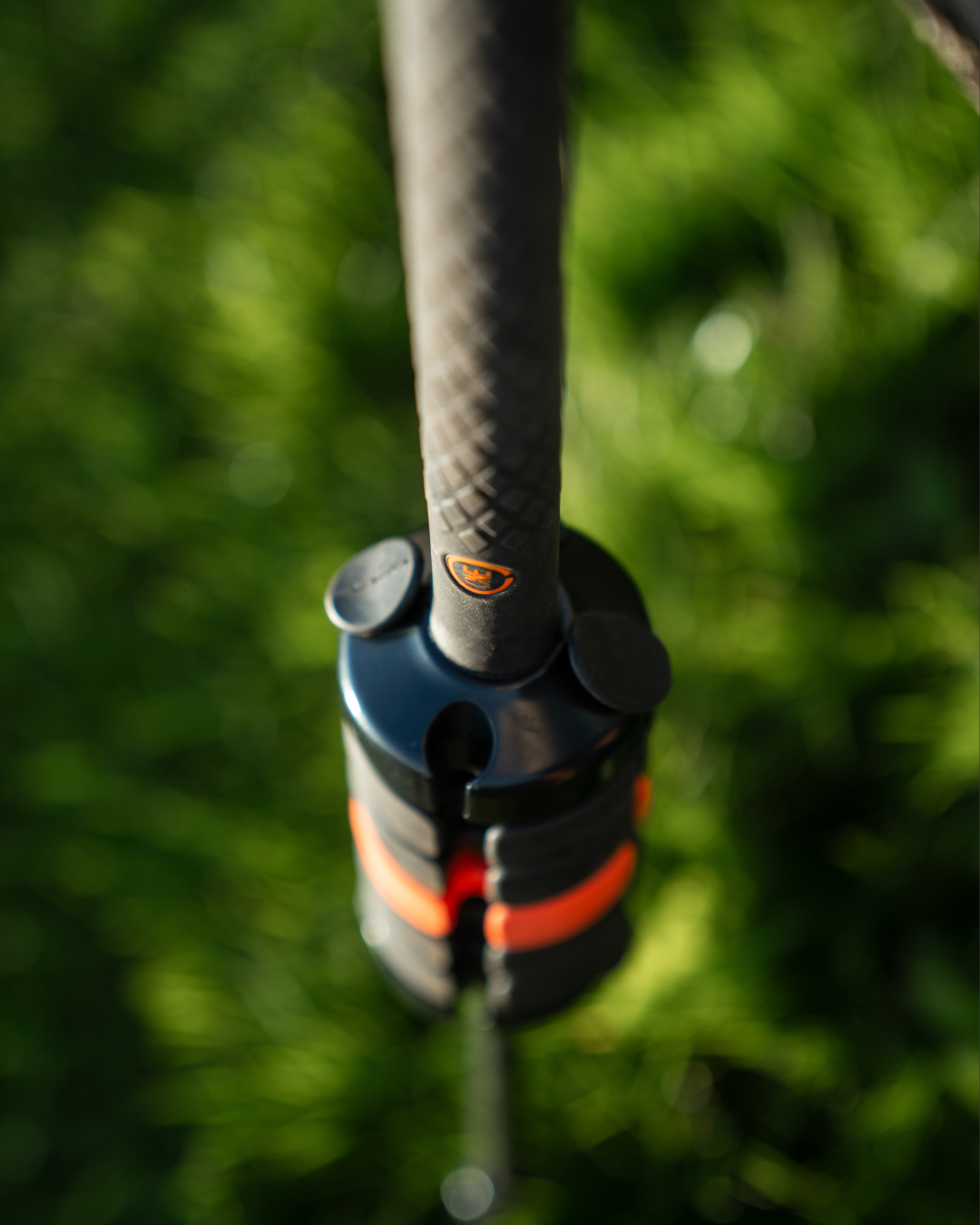
A weighted swing trainer with adjustable weights, like the ONE Club Trainer, makes the overspeed workout easier to run at home because the same tool covers the overload and underload parts of the routine. The swap-in weight system cuts the setup hassle compared to keeping multiple separate sticks.
Combining the three into a weekly schedule
The schedule that works for most amateurs: 15 minutes of mobility work daily (any time), three 45-minute strength sessions a week (Monday, Wednesday, Friday for most people), and three 15-minute overspeed sessions a week (Tuesday, Thursday, Saturday). Total time, about 5 hours a week. The sequencing across the week matters because the body needs rest days between hard work.
The overlap is on purpose. The daily mobility routine keeps the body open. The strength sessions build the engine. The overspeed sessions teach the engine to fire at the new top end. Skip any one and the other two leave gains on the table. This is the fundamental routine that turns a casual amateur into a better golfer who can produce solid contact and more consistent shots at higher speed.
How to track progress
Most amateurs don't own a launch monitor, but progress is still easy to track. Three simple proxies: max carry distance with a 7-iron over five golf balls (test every two weeks), grip strength with a hand dynamometer (cheap, tracks well with clubhead speed), and rotational power tested with a medicine-ball throw (record the yard distance of a hard rotational throw, retested every four weeks). Run these tests once per week or every two weeks and you will know if the program is working.
If carry distance is up 5 yards by week 6 and grip strength is up 10 percent, the program is working. If neither has moved by week 8, something in your body is the limit. Most often, it's mobility. Adding a few weeks to the mobility phase usually unlocks the gains the other systems were ready to deliver.
Common reasons amateurs don't gain speed
The three biggest derailers: skipping mobility (most common), trying to swing harder with a stiff, inefficient motion instead of cleaner mechanics, and not tracking progress. Poor sleep is a quiet fourth. Speed gains need nervous-system recovery, and the nervous system recovers during sleep. Players who train hard and sleep six hours stall fast and lose speed in the process. Players who sleep eight keep gaining for months. To unlock the next gear and increase your swing speed without sacrificing accuracy, treat recovery as part of the program. These are the proven methods I share with players who want to hit longer drives toward the target while keeping the same setup.
Age is sometimes blamed, often unfairly. Players in their 50s and 60s often gain 3 to 6 mph with the right program. The recovery curve is slower, so the volume has to be lower, but the adaptation still happens. Age is rarely the real reason for a plateau.
How to increase golf swing speed questions
How much swing speed can I gain in 12 weeks?
A real range for most amateurs is 5 to 10 mph of clubhead speed over 12 weeks of focused work on all three systems (mobility, strength, overspeed). Players who haven't done a structured speed workout before tend to gain at the high end. Players already doing some speed work tend to gain at the lower end. They have already cleared the easy wins.
Which system should I work on first?
Mobility, almost always. Without the range of motion to use, neither strength nor overspeed work will give you its full effect. Spend the first month on mobility before adding the other two. The combined program drives the biggest gains. Mobility first builds the base.
Is overspeed training safe?
For healthy adults, yes, with a proper warm-up. The plan calls for short sessions (15 minutes), a full warm-up before the first max-effort swing, and at least one rest day between sessions. Players with back or shoulder issues should clear overspeed work with a doctor or physical therapist before starting.
Do I need a swing trainer to increase swing speed?
Not strictly, but it shortens the timeline. A weighted training tool like the ONE Club Trainer makes the overspeed part of the program simpler because the swap-in weights cover overload and underload work in one device. It is one of the better ways to boost swing speed and add speed and distance without changing your golf club setup. For amateurs serious about the four-week to twelve-week timeline, a weighted trainer is probably the highest-leverage gear purchase you can make.