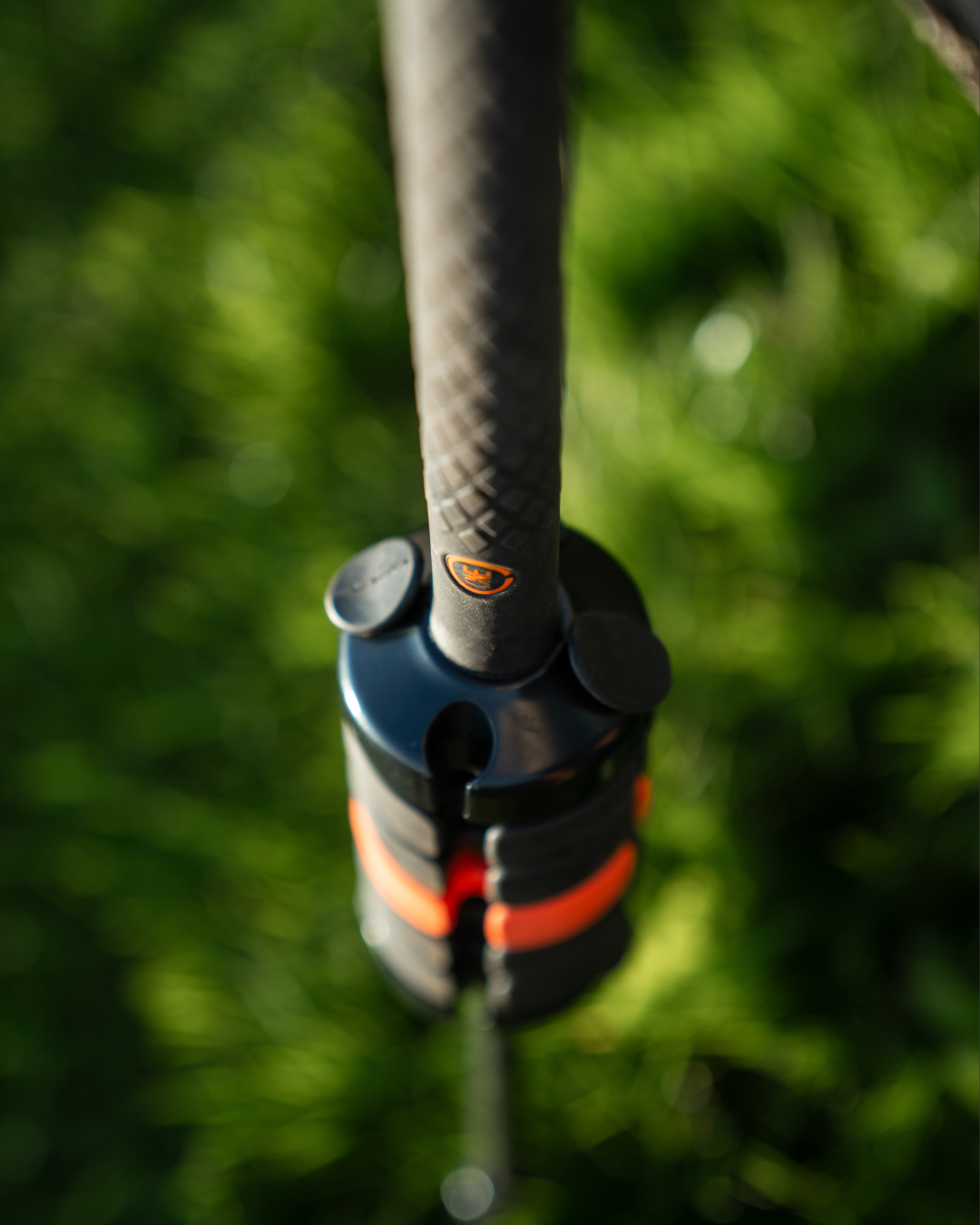

Golf swing trainers fall into five families, and picking the right family matters far more than picking the trendiest product. The five are weighted swing trainers, overspeed trainers, alignment and swing plane tools, tempo trainers, and impact bags. Each one fixes a different fault, and using the wrong family for your problem is the most common mistake I see. After twenty plus years on the lesson tee, I can tell you a player chasing distance does not need the same tool as a player fighting a slice.
This guide walks through the five families and gives you a simple decision framework so you can match a trainer to your actual fault. By the end you will know which family belongs in your bag.
How to think about golf swing trainers before you buy anything
Start with the fault, not the gadget. The players I see at the range walk in with a product in mind, when what they actually need is an honest answer to a single question. What is the one thing in your swing that costs you the most strokes. If you do not know, get a lesson before you spend money on hardware. TrackMan's swing data shows amateurs lose far more shots to face control and path than to lack of clubhead speed, which means most golfers should be looking at alignment or impact trainers before overspeed sticks, according to TrackMan's swing research.
The second question is just as important. Will you actually use it. A swing trainer that lives in the garage is a paperweight. The simplest tools, the ones you can pull out for ten minutes a day, almost always beat the elaborate ones that need a setup ritual. Frequency beats fanciness every single time.
Weighted swing trainers for tempo, sequencing, and feel
Weighted swing trainers are the family I reach for first when a student is rushing the transition or losing their sequence at the top. Tools like the ONE Club Trainer and the Orange Whip use added mass to slow you down and force the body to lead. You cannot muscle a weighted trainer. The heavy clubhead punishes any attempt to throw your hands from the top with an ugly, off plane swing that you can feel instantly. That feedback is the whole point, and the player learns quickly what a connected backswing feels like.
Who is this family for. Players with quick tempos, players who come over the top, and any golfer who wants to warm up properly before a round. Twenty swings with a weighted trainer in the parking lot will activate your core, lengthen your turn, and groove sequencing better than half hearted practice swings with a 7 iron. The Titleist Performance Institute has written for years about preparing the body before the first tee, and a weighted trainer is one of the cleanest ways to do it, per Titleist Performance Institute's published warm up research.
What to expect. After two or three weeks of daily swings, most players report a smoother transition and better balance at the finish. They are not hitting the ball thirty yards further. They are hitting it more solidly, more often, because the sequencing has cleaned up. That is what this family does. It is not a speed tool. It is a tempo and rhythm tool, and confusing those two jobs is where buyers go wrong.
Overspeed trainers for golfers who actually need more clubhead speed
Overspeed trainers do the opposite job of weighted trainers. They are lighter than your driver, sometimes much lighter, and the goal is to retrain your nervous system to swing faster than it currently believes it can. SuperSpeed Golf is the most established brand here, and Rypstick is a popular newer option. The protocol is simple. Swing the lightest stick, then medium, then heavier, three days a week, and let the light weight pull your top end speed upward. SuperSpeed reports players who follow the protocol consistently can add five to eight percent of clubhead speed in four to six weeks, according to SuperSpeed Golf's training materials.
Who is this family for. Players who already strike the ball reasonably well and want effortless distance, juniors whose nervous systems adapt fast, and seniors who have lost speed over the past few seasons. Overspeed work is also wonderful for golfers stuck in a swing speed plateau. It is not for the player who hits one ball out of three sideways. Speed without face control is just longer trouble.
A short warning. Overspeed training is real exercise. If you have a sore back or a cranky shoulder, ease in, and skip the heaviest stick until you know your body can handle the load. Build the volume gradually the same way you would with any new strength training program, and stop if anything pinches.
Alignment and swing plane tools for path, face, and aim
This family is the cheapest and one of the most underused. A pair of alignment sticks costs less than a sleeve of premium balls and will fix more swings than half the gadgets on the market. Lay one along your toe line and another outside the ball pointing at your target, and you have a station that holds you accountable. Most amateurs aim well right of where they think. You cannot fix a swing path problem if your aim is wrong, because your brain will keep manipulating the club to send the ball at the target, and you will groove a compensation that gets worse over time.
Beyond plain alignment sticks, this family includes swing plane trainers and aiming devices like the Pelz Putting Tutor for the short game and various plane boards or impact plates for the full swing. The point is to give your eyes and your body a real reference. You feel where the club should go, you see where your aim actually points, and the disconnect between perception and reality starts to close.
Who is this family for. Honestly, everyone. If you only buy one training aid, buy alignment sticks. Use them every range session for the first five minutes. They cost nothing, work indoors and out, and the discipline they build carries over to the course faster than any other piece of gear.
Tempo trainers and metronome work for rhythm under pressure
Tempo is the silent killer in golf. A player can have a beautiful position at the top of the backswing and still hit a bad shot because the downswing started a quarter beat too early. Tempo trainers fix that. The classic is Tour Tempo, which uses an audio cue and a three to one ratio of backswing to downswing. A simple metronome app set around 76 beats per minute works too, with the takeaway on beat one and impact on beat three.
Tempo trainers overlap with weighted trainers, and golfers wonder why they would buy both. A weighted trainer teaches your body the feel of a smooth sequence. A tempo trainer teaches your brain the timing of that sequence. One trains the muscles, the other trains the clock. If your tempo is rushed only on the first tee, that is a clock problem, and audio tempo work will help more than another weighted swing.
Who is this family for. Players who hit the ball well in practice but get quick on the course, golfers who decelerate on short pitches, and anyone who wants a metronome in their ear before the first tee. Tour Tempo style work is also a wonderful drill for the short game, because deceleration on a wedge is almost always a tempo issue, not a mechanical one.
Impact bags and hitting trainers for face, lag, and ball striking
The fifth family teaches you what a solid strike feels like. An impact bag is a stuffed canvas bag you swing into, so you can rehearse the impact position without the consequence of a real ball flight. Hit it with a square clubface, forward shaft lean, and your hips already turned toward the target, and your hands learn the geometry of a real strike. There is no faking it. The bag does not move if you flip your wrists.
This family also includes flexible shaft trainers and lag trainers, which build the feeling of the club lagging behind the hands through the transition. These are excellent for golfers who cast from the top, stand the club up at the top of the backswing, or struggle to compress an iron. They do not improve speed and they do not fix tempo. What they teach is impact, and impact is where most of ball striking quality is decided. HackMotion publishes good wrist mechanics drills that pair well with an impact bag, according to HackMotion's wrist drill library.
Who is this family for. Players who slice, players who flip, and anyone who has been told their hands are too active through impact. It is also one of the most satisfying tools to use in a garage on a winter day, because you get the thump of a real strike without needing a net or a mat.
A simple decision framework for choosing your first golf swing trainer
Here is how I walk a player through the choice on the lesson tee. Three questions in order.
Step one: name the fault. Is your problem tempo and sequencing, lack of clubhead speed, aim and swing path, rhythm under pressure, or impact and face control. If you do not know, the answer is almost always aim and swing path, because that is what most amateurs get wrong first.
Step two: match the fault to a family. Tempo and sequencing means a weighted swing trainer. Speed means an overspeed system. Aim and path means alignment sticks and a plane tool. Pressure rhythm means tempo audio work. Impact and face control means an impact bag or flexible shaft trainer.
Step three: pick the simplest product in that family that fits your budget and space. Match the tool to your real life, not the marketing photo. The goal is daily use, not a closet full of gear.
Can golf swing trainers be used indoors
Most of them, yes. Weighted trainers, overspeed sticks, tempo audio tools, and alignment work all transfer cleanly to a living room or basement, provided you have ceiling height. Eight feet of clearance is the rough minimum for a full swing with a short trainer. Impact bags work indoors too, just place them on a stable mat. The only family that needs outdoor space is a full plane board or simulator.
The indoor angle is one reason I push training aids on Canadian players. We have six months a year when the range is closed or snowed in. Ten minutes a day with a weighted trainer in the basement, plus a few sets with an overspeed stick, will keep your swing alive through January and February. By April you are not starting from zero.
What results can you expect from a golf swing trainer
Honest expectations matter. A swing trainer makes the right rep easier to find, so when you do practice you are not wasting reps on bad patterns. Plan on two to four weeks of consistent use, five to ten minutes a day, before you see a real change. Weighted trainers show up first as better contact and a more balanced finish. Overspeed work shows up as two to four miles per hour of clubhead speed after a month. Alignment work shows up immediately as more confident aim. Tempo work shows up as fewer big numbers on the back nine. Impact work shows up as cleaner divots and more compression on the iron game.
None of these tools replaces playing the course, and none of them replaces working with a coach. A swing trainer is a multiplier on good practice, not a substitute for it.
Golf swing trainers questions
What are the best types of golf swing trainers for beginners?
Start with alignment sticks and a weighted swing trainer. Alignment sticks fix aim and setup, which is the single biggest fault in a beginner's game, and a weighted trainer builds a smooth tempo before bad habits set in. Both tools are cheap, portable, and forgiving. Save overspeed sticks and impact bags for later, once your swing has a stable shape.
How do golf swing trainers work?
They give your body and brain immediate feedback that a normal practice swing does not. A weighted trainer punishes a rushed transition. An overspeed stick rewards a faster swing. Alignment sticks expose poor aim. A tempo tool reveals when you are getting quick. The trainer is essentially a coach that never gets tired.
Are golf swing trainers worth the money?
The good ones, yes, if you match the family to your fault and actually use them. A 200 dollar trainer used twice is wasteful. A 60 dollar set of alignment sticks used every range session is one of the best investments in your golf bag. Buy for the fault, not the brand.
Can golf swing trainers help my short game and putter?
Yes, several do. Tempo audio tools are excellent for wedge work because deceleration is a tempo issue. Alignment sticks help putting setup. For the full swing, focus on the family that matches your biggest fault, and treat short game tools as a separate decision.
What features should I consider when buying a golf swing trainer?
Size, weight, indoor friendliness, and feedback quality. A trainer that does not fit your space will not get used. Look for tools that produce a clear signal when you do something wrong, whether a flexible shaft that whips when you cast or a heavy head that pulls you off balance when you rush. Clear feedback turns a tool into a teacher.