The best indoor golf training tools are the physical pieces of equipment that let you hit, measure, and roll real shots inside your house: a launch monitor, a hitting mat, a net or impact screen, a putting green or premium putting mat, and a video capture setup. Everything else is supporting cast. I tell my students that if you can stripe a 7 iron off a thick foam mat into a 10 foot net while a SkyTrak or Garmin R10 reads your club path, you have a personal driving range. The Garmin Approach R10 launched at $599 in 2021 and still sits in that price bracket, which is why it shows up in almost every basement build I walk into.
This guide is about the gear itself. I will walk through launch monitors, hitting mats, nets and impact screens, putting greens and putting mats, full simulators, and video systems. I will tell you what to spend, what to skip, and what fits in a 9 foot ceiling. If you are looking for drills and routines to run with the gear once it is set up, that belongs in a different article. Here we are talking tools.

Launch monitors are the brain of the indoor setup
If you only buy one piece of indoor golf training equipment this year, buy a launch monitor. Nothing else gives the same instant feedback. A launch monitor tells you ball speed, club path, face angle, smash factor, spin, carry, and dispersion, and that data is what lets you actually fix swing mechanics instead of guessing at them. Without one you are hitting balls into a net and guessing. I have watched players grind for six months on the wrong fix because no one was measuring their swing path. Two range sessions with a monitor and the swing path fault was obvious.
The three names that come up over and over are SkyTrak, Garmin Approach R10, and the Foresight family (GC3, GCQuad, Bushnell Launch Pro). The Garmin R10 sits at the entry point. SkyTrak Plus reads photometrically, which means it watches the ball with cameras rather than radar, and that suits a tight basement where a radar unit struggles to track the full flight. Foresight units cost more but read the club face directly, which is what makes them the standard at custom fitters. MyGolfSpy ran a detailed comparison of consumer launch monitors that is worth reading before you pull the trigger, especially their take on indoor accuracy and ball flight modeling, available at MyGolfSpy's launch monitor buyer's guide.
A few rules from years on the lesson tee. Radar units like the R10 want at least 8 feet behind the ball and 10 feet of ball flight in front. Photometric units like SkyTrak Plus only need a few feet in front, which is why they are the better pick for a 12 by 12 room. If you wear out 60 balls a week, you want a monitor that handles foam or limited flight balls without crying about it. SkyTrak does. Some cheaper radar units do not.
Hitting mats: the floor under everything else
The mat is the part of the setup that gets the least respect and causes the most injury. A bad hitting mat is a thin rubber sheet that gives nothing on impact, sends a shock up the lead wrist, and tells you nothing about your strike because the club bounces off whether you hit it fat, thin, or pure. I have seen elbow tendinitis show up in 90 days of bargain mat use. Spend the money.
A real practice mat has a thick foam or fiber base of at least 1 inch, ideally closer to 2.5 inches, with a turf top that lets the club take a small divot or at least skid through like real grass. Fiberbuilt and Real Feel both make mats in that range and they last for years. The Country Club Elite is another name fitters trust. You want a hitting strip plus a stance area, and if you can find a mat with a divot board insert, even better. A divot board shows you where the low point of the swing actually was, which is one of the most useful pieces of instant feedback a coach can give without saying a word.
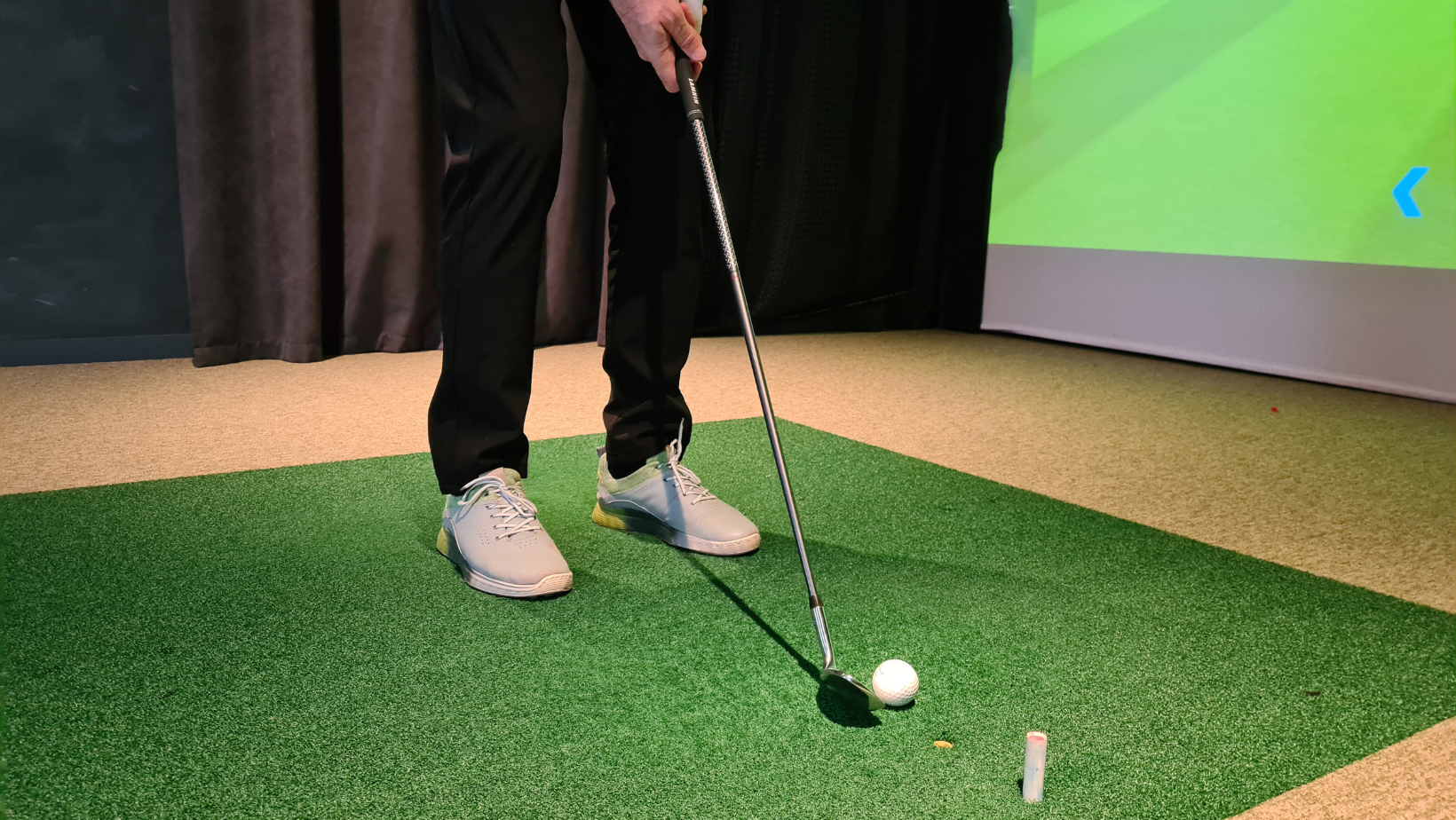
For chipping and pitching, a separate short game mat with a softer turf and a slight grain is worth the second purchase. Hitting wedges off a firm full swing mat will scrub the leading edge and teach you a bladed strike that does not transfer to grass.
Nets and impact screens for the full swing
You need somewhere for the ball to go. Net or screen, that is the call. Hitting nets like the GoSports 10x7 or the Spornia SPG-7 fold up, take 15 minutes to assemble, and run between $200 and $500. Impact screens are the permanent version, built into a frame, and they take a real projector and a launch monitor to come alive as a simulator. A budget hitting net is the right move if you are starting out or only have part-time access to the space.
The thing nobody tells you about hitting nets is the ceiling. A standard residential ceiling is 8 feet. With a 7 iron you have about 6 inches of grace. Driver in a 9 foot basement is workable. Driver in an 8 foot basement is asking for a ceiling repair. Measure the room before you order, and if the ceiling is borderline, drop to a 7 foot tall net and choke up on the longer clubs. Golf.com ran a useful piece on indoor practice space requirements that covers ceiling math and screen distance better than most product listings, available at Golf.com's home simulator guide.
If you go the screen route, the impact screen itself is cheaper than people think, often $200 to $400 for a quality one. The frame, projector, and computer are where the budget runs. A 4K short throw projector mounted overhead is the look you want. Anything less and the graphics wash out.

Putting greens and putting mats save more strokes than the rest combined
Here is the math. The average amateur takes around 34 putts per round. If you shave three putts off that number you save more strokes than a 10 yard driver gain. A good putting mat builds the feel for distance and start line, and a quality indoor putting green builds the read. Putting aids are the cheapest, easiest, smallest footprint indoor golf training tools and they deliver the biggest return. Every basement build should start with a premium putting mat or a roll-out putting green even before the full swing gear shows up.
The PuttOut Premium and the Perfect Practice mat are the two names that come up in nearly every conversation about indoor putting. The Perfect Practice mat is what Dustin Johnson uses at home, and it has two hole sizes, a regulation cup and a half-cup that forces a center strike. The PuttOut Pressure Putt Trainer is the ramp at the end of the mat that returns the ball the exact distance past the hole it would have rolled, which is the best feedback device in golf for distance control. I keep one in my office and I use it between lessons. The roll is genuinely close to a stimp 11 green.
A custom indoor putting green is the bigger investment, a permanent installation of synthetic turf with real contours and break. EyeLine Golf makes the most popular alignment and putting aids, the Mirror and the Roll the Rock mat, and they stack on any green. A 4 by 12 strip down a hallway is enough to drill 10 footers all winter.
Full golf simulator builds: when the pieces become a system
A golf simulator is the combination of a launch monitor, an impact screen, a hitting mat, a computer, and simulation software like GSPro, E6 Connect, or TGC2019. When all the pieces talk to each other you have a true indoor course. Pebble, Bandon, Augusta, all rendered, all playable, all with real ball data driving the shot. This is the dream build and prices range from about $3,000 for a SkyTrak based room to $25,000 for a Foresight GCQuad pro build. For most golfers, a mid range full swing simulator gives the same indoor practice value at a fraction of that ceiling.
What I tell players is that you do not need the dream build to improve. You need a launch monitor that reads accurate club data, a quality mat, and a target. The simulator software is the fun layer. The data layer is the training layer. The first time a player sees their swing path is 6 degrees out to in, the conversation about why they slice ends right there. A weighted swing trainer like the ONE Club Trainer pairs well with simulator practice because it loads the hands during warm-up and pulls the body into sequence before you start logging launch monitor numbers.
Software matters more than people expect. GSPro has the most realistic ball flight modeling and pairs with most major launch monitors. E6 Connect is easier to set up with thousands of licensed courses. Pick the software, then the monitor that supports it, then build the room around both.
Video capture and grip trainers round out the toolkit
A phone on a tripod is a training tool. Set it down the line at hip height, hit five 7 irons, watch them back at quarter speed. Most players have never seen their own swing from down the line and the first viewing is usually a shock. Apps like Hudl Technique, V1 Golf, and the free Coach's Eye replacement let you draw swing plane lines and stop on frame. This is a $30 add to a $3,000 build that pays for itself in one session.
For the hands, the SKLZ Golf Grip Trainer is the classic. It clips onto a 7 iron and locks the hands into a neutral grip. The Sure-Strike trainer guides the lead arm through the proper swing plane. The Lag Shot 7 iron is a whippy shafted club that forces a smooth tempo and stops the over the top move at the transition. Alignment sticks belong on every practice mat, full stop, and a single pair handles aim, swing plane checks, and ball position drills. Lay one along the target line, one along the toes, and you have built a station that fixes more swing faults than any drill I can write down.
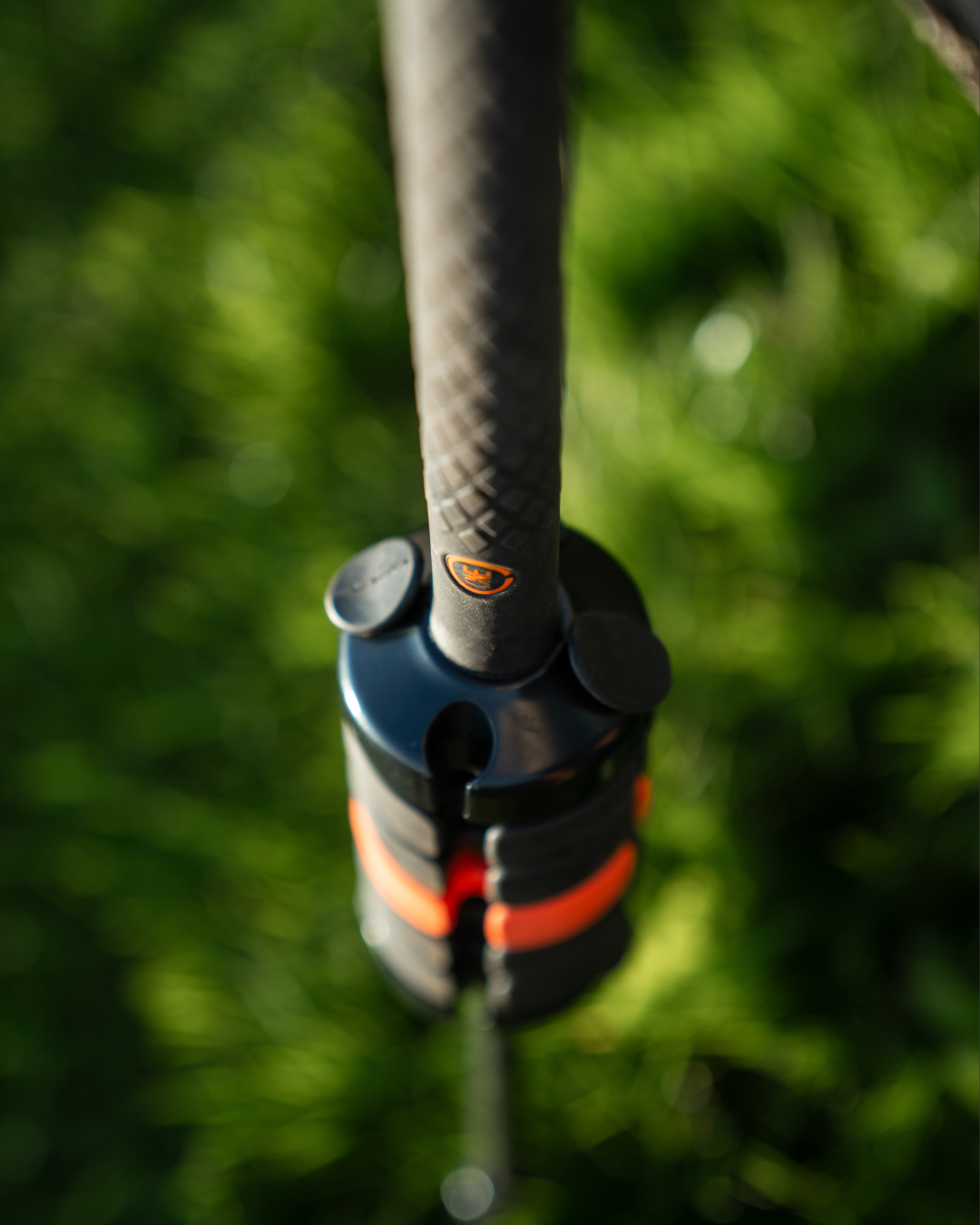
For speed, SuperSpeed Sticks and TheStack System both work. SuperSpeed runs a three club overspeed protocol with light, medium, and heavier than driver shafts. TheStack adds variable weights to a single shaft. Both add 4 to 8 mph of club speed over a 12 week protocol when the player actually does the protocol. The science behind overspeed training is solid and well documented. Most players who own one only use it once a month, which is why most players who own one do not get faster.
How to choose the right indoor golf training tool for your space and skill level
Three questions decide what you buy. How much room do you have. How much do you want to spend. What does your game actually need. A 25 handicap who putts at 38 a round should not buy a $4,000 launch monitor before they buy a $150 putting mat. A scratch player chasing club speed should not buy alignment sticks instead of overspeed sticks.
Walk the room with a tape measure first. Width across the stance, depth from the ball to the wall behind the screen, height from the floor to the lowest beam or duct. Write down the numbers. Then look at what fits. A 10 by 10 by 8 room can host a hitting net, a quality mat, a launch monitor, and a putting strip. That is a complete indoor practice setup for under $2,000 if you shop the right brands. You do not need a 14 by 16 dedicated room to improve.
For skill level, beginners gain the most from a grip trainer, alignment sticks, and a putting mat. Mid handicaps need a launch monitor and a mat that gives strike feedback on iron contact and tee shots. Better players need launch data, video, and overspeed work. Practice tools are not one size fits all, and the smartest investment is the one that matches the weakest part of your golf game.
Indoor golf training tools questions
What is the 70/30 rule in golf?
The 70/30 rule says spend 70 percent of your practice time on the short game and 30 percent on the full swing, because most strokes are lost inside 100 yards. Indoor, that translates to a putting mat and a chipping net getting more reps than the driver.
What is the 80/20 rule in golf?
The 80/20 rule applies the Pareto principle to practice: 80 percent of scoring improvement comes from 20 percent of practice activities, which for most players means putting, wedge play, and tee shot accuracy. Indoor tools that target those three give the highest return.
How can I practice golf indoors?
You practice indoors by building a station with a thick hitting mat, a net or screen, a launch monitor for feedback, and a putting mat for short game work. Twenty minutes of focused indoor practice with measurement beats two hours of mindless ball beating at the range.
What are the best training tools for golf?
For indoor practice, the highest impact tools are a launch monitor like SkyTrak or Garmin R10, a premium hitting mat with a fiber base, a quality putting mat, alignment sticks, and a phone on a tripod for video. That kit covers swing mechanics, ball striking, putting stroke, and self-review.
Are indoor golf training aids suitable for all skill levels?
Yes. The tools scale with the player. A beginner uses a grip trainer and a putting mat. A single digit handicap uses a launch monitor, video, and overspeed sticks. Same room, different equipment, different practice sessions, the same goal of lower scores.