
You increase swing speed driver and irons by training each golf club for the job it actually does on the course: the driver wants ground-up rotational power and a long arc, the fairway woods want a wide, sweeping path with steady tempo, and the irons want a tight sequence that holds compression on the golf ball at impact. Last fall I ran a six-week speed block with a 14-handicap student who picked up 9 mph on his driver and only 2 mph on his 7 iron, and the gap surprised him until we looked at how differently each club is loaded. That is the real story of speed in golf. The clubs are different tools, and the training has to match.
This article walks through the club-by-club approach I use on the lesson tee. We will cover the mechanics for the driver, fairway woods, and irons, why gains in one category often do not transfer to another, the specific drills I assign for each group, and the common mistakes that quietly cap distance.
Why driver speed and iron speed are not the same skill
Most amateurs treat the golf swing as one motion repeated at different lengths, and that is where a proper golf swing breaks down. The driver swing rewards a wide arc, an upward angle of attack, a long backswing, and rotational unwind from the ground that creates power and speed together. The iron swing rewards a steeper attack, a forward shaft lean at impact, and swing mechanics that hold the wrist angles a fraction longer. Driver wants stretch and release. Iron wants stretch and trap.
That is why I see players with a 105 mph driver and a 78 mph 7 iron, and others with a 95 mph driver and an 85 mph 7 iron. The ratio between driver speed and 7 iron swing speed is usually around 1.3 to 1.35 for a balanced player, per the swing data archive at TrackMan's tour and amateur benchmarks. A 1.5 ratio means the iron swing is too short. A 1.1 ratio means the driver swing is too iron-like, with no width and no upward strike.
I tell my students to stop thinking about golf swing speed as one number. Track it by club. The player who knows their speed by club fixes problems faster than the player who only knows their driver number, especially once they cross 100 mph and the swing starts hiding its leaks.
Driver: width, ground, and the long arc
For driver speed, the three biggest levers a golfer can pull are arc width, ground force, and a patient transition. Width is the distance the clubhead travels in the backswing and downswing. Ground force is how hard the lead leg pushes into the turf at the start of the downswing. The transition is the small moment when the lower body starts down while the club is still finishing its load. Get those three right and the driver gains mph without you swinging harder.
One drill I lean on for driver speed is the step-through. The player starts with feet together, takes the club back, then steps the lead foot toward the target as the downswing starts. The step forces ground engagement and teaches the lower body to lead. It is the most direct way I know to feel sequencing in a driver swing. Ten step-throughs followed by ten normal swings, and the normal swings come out 3 to 5 mph faster.
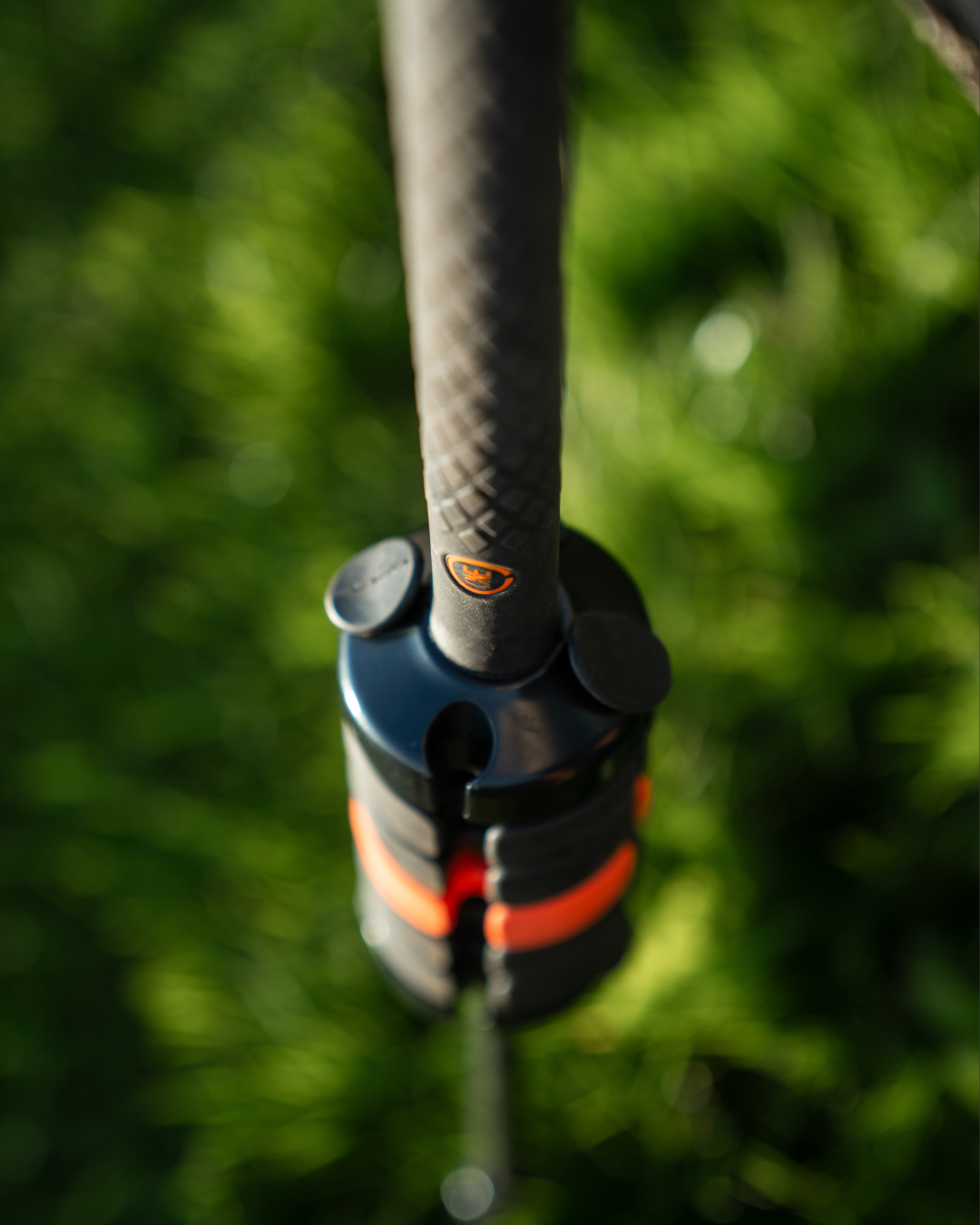
Overspeed work matters here too. Light shafts swung at 110 percent of normal speed train the nervous system to swing the club faster. The protocol popularized by SuperSpeed's swing speed training research uses three weighted sticks across about ten minutes, three times a week. I have seen golfers add 4 to 7 mph on driver in six to eight weeks with that kind of consistency, which is the most reliable way to increase driver speed I know. A weighted swing trainer like the ONE Club Trainer is useful in the same training session because the load punishes a rushed transition and rewards a patient downswing.
Fairway woods and hybrids: the in-between case
Fairway woods sit between the driver and the long irons, and the speed pattern reflects that. The club is shorter than the driver but longer than a 5 iron, so the arc is wider than an iron swing but tighter than a driver swing. Trying to hit a 3 wood with a driver swing leads to thin contact and a low ball. Trying to hit it with an iron swing leads to fat contact and lost yards.
For fairway woods I drill tempo more than raw speed. The player who wants more 3 wood speed almost never needs to move faster. They need to move smoother. I use a "one and two" rhythm where "one" is the backswing, "and" is the transition, "two" is impact. Players who cut out the "and" lose every bit of stored speed.
If your 3 wood goes a similar distance to your 5 iron, the problem is almost always tempo and clubface contact, not strength. Slow the backswing down by ten percent and you will pick up ball speed at impact. This is one of the few places in the golf game where moving slower produces a faster result and you actually generate more speed.
Iron speed: compression beats raw mph
Iron distance is a different conversation. The PGA Tour average 7 iron swing speed sits around 90 mph, and the tour average distance is about 172 yards. The amateur average 7 iron speed is closer to 75 mph, and the amateur distance is closer to 145 yards. But here is the part that surprises people. If you take an amateur and bump their 7 iron speed from 75 mph to 80 mph without fixing strike, the iron shots pick up maybe 8 yards. Clean up strike at 75 mph and the same player picks up 12 yards. Compression beats raw mph in iron play, almost every time, and when a player asks me "how do I hit my irons farther," that is the first answer.
The 24-38 rule, which roughly says clubs above 24 degrees of loft (long irons) reward speed more than clubs below 38 degrees (short irons), is a useful mental model. Long irons need clubhead speed to launch and carry. Short irons need control, spin, and clean strike. That is why I rarely chase speed with my students' 8 iron, pitching wedge, or sand wedge. I chase strike.
For middle and long irons I assign two drills. The first is the half-shaft drill, where the player chokes down halfway and hits 5 iron shots focused only on holding wrist angles deep into the downswing. The second is a heavy-club drill using a weighted shaft trainer, three sets of five swings at controlled tempo. The heavy stick teaches the body to keep the wrists loaded against the load, which is exactly what a good iron impact feels like. HackMotion's wrist data shows that tour players hold lead wrist flexion later into the downswing than amateurs, and that delayed unhinge is where iron compression actually comes from.
Why driver speed gains do not always transfer to irons (and the other way around)
A player who adds 6 mph on driver through overspeed training does not automatically gain 6 mph on 7 iron. Sometimes they gain one. Sometimes they lose one because the new lower body move shows up at the wrong time in an iron swing. The reason is sequencing.
Driver speed comes from a longer kinetic chain that starts in the trail leg, runs through the hips, and finishes in the hands. Iron speed comes from a tighter version of the same chain where the hands stay quieter. When a player trains hard to create speed with the driver, the hands often start to lead the downswing because they have learned to let go earlier. That works on a tee with a 46 inch driver. It does not work with a 37 inch 7 iron because the early release adds loft and bleeds compression.
What I tell my students: train driver in dedicated blocks, then come back to your irons in a separate session and reset the feel. Two overspeed sessions a week plus one focused iron session at 75 percent effort with strike as the only goal will keep both numbers moving up together.
Club-specific drills I assign on the lesson tee
For driver, the step-through plus three weeks of overspeed work. I have players do ten step-throughs as a warm-up routine before every range session because it primes the lower body and saves the long irons from getting cast.
For fairway woods, the tempo count. One and two. Out loud. Grown players on the range look silly doing it and then pick up 6 yards on a 3 wood inside one session.
For long irons, the half-shaft compression drill. Choke down, hit 4 iron and 5 iron half shots, hold the lead wrist angle. Strike improves and speed at impact climbs 2 to 3 mph because the player stops casting and starts to swing the club faster through the ball without trying to.
For middle irons, the heavy stick. Three sets of five at controlled tempo, twice a week, paired with basic strength training. Lift weights twice a week focused on hinge patterns and core rotation, and the heavy stick produces speed at impact in less time.
For short irons and wedges, I do not chase speed. I chase contact. A golf shot hit out of the center of the clubface goes farther than a mishit at higher speed, and any distance in golf with the scoring clubs has to start there.
Common mistakes that cap club-specific speed
The biggest mistake is trying to swing every club the same way. The 8 handicap who treats his pitching wedge like a small driver loses spin. The 18 handicap who treats his driver like a big 7 iron loses 15 yards.
The second mistake is grip pressure. Tight hands kill club head speed in every club in the bag. On a 1 to 10 scale I want grip pressure around 4 with the driver and 5 with the irons.
The third mistake is equipment that does not match the player. A shaft too heavy for your driver swing speed costs mph at the top end. A shaft too light for your iron swing costs control. According to the Titleist Performance Institute's club-fitting research, proper shaft weight and flex can add or cost 2 to 4 mph of effective speed at impact.
The fourth mistake is skipping recovery. Speed training is nervous-system work. Two hard overspeed sessions back to back make the third session slower, not faster. Take at least 24 hours between speed sessions.
Putting it together: a six-week club-specific plan
Weeks one and two, build a base. Twice a week, ten step-through drills with the driver, three sets of five with a heavy iron trainer, one tempo session with a 3 wood. Keep effort at 80 percent.
Weeks three and four, push the driver. Add overspeed work, three sticks, ten minutes, three times a week. Keep iron sessions at controlled tempo and let the driver gains lead.
Weeks five and six, integrate. Two driver sessions, one focused iron session at 75 percent effort, one full bag day on a launch monitor. By the end of week six most players I work with see 5 to 8 mph on driver, 2 to 4 mph on 7 iron, and better strike across the bag.
Increase swing speed driver and irons questions
What is my swing speed if I hit a 7 iron 150 yards?
A carry of 150 yards with a 7 iron points to a swing speed in the 80 to 84 mph range for a clean strike, higher if your strike is off-center since poor contact loses 5 to 8 yards. Use a launch monitor to confirm because turf and wind shift the number.
What is the 24-38 rule in golf?
The 24-38 rule says clubs with less than 24 degrees of loft are harder for amateurs to hit consistently and should usually be replaced by hybrids, while clubs above 38 degrees of loft are easier and reward strike over speed. It is a useful filter when deciding which clubs to chase distance with and which to play for control.
What is the best way to increase my driver's swing speed?
The most reliable way to increase your speed with the driver is a three-pronged plan: overspeed training three times a week to gain speed, ground-force drills like the step-through to teach lower body lead, and a fitted Titleist or other major-brand driver shaft that matches your tempo. Expect 4 to 7 mph of gain in six to eight weeks of consistent work, and use it as a way to maximize your speed without sacrificing the proper golf swing you already own.
What is the 70/30 rule in golf?
The 70/30 rule is a tempo guideline that says about 70 percent of swing time should happen in the backswing, only 30 percent in the downswing. Most amateurs invert that ratio and rush the takeaway, which kills sequencing and costs both speed and strike.
How can I increase swing speed without losing accuracy?
Train speed and strike in separate sessions. Overspeed work builds raw mph but can teach loose contact, so always pair a speed session with a strike-focused range block where the only metric is center clubface contact. According to Golf.com's instruction archive, golfers who alternate speed days and strike days hold accuracy better than players who mix both into one session, and this is the cleanest path to better golf without sacrificing the shape of shots you already trust.