
Tour players improve golf swing speed by treating it like a year-round training discipline, not a quick fix on the range. The average PGA Tour driver clubhead speed sat at 116.4 mph in the 2023 season, while the average male amateur measured around 93 mph, according to TrackMan's swing-data archive. That 23 mph gap is not pure genetics. It is the product of warm-ups that take 40 minutes, off-season programming that runs from October to January, tempo work that never gets skipped, and recovery habits most weekend players never even consider.
I have spent a lot of time on lesson tees in Quebec and Florida, and the thing I keep coming back to is this: the players I see at the range who hit it the longest are not the ones swinging the hardest. They are the ones who built speed in the gym during the off-season, dialed in their sequencing with their coach in January, and protected that speed with a discipline that looks boring from the outside. This article walks through the specific routines tour-level golfers use, the drills their coaches actually run on Tuesday range sessions, and how a club-level player can borrow the parts that actually transfer.
The pro warm-up that builds speed before the first ball
Watch any PGA Tour player walk onto the range before a round and you will see the same general pattern. They start slow. They never, ever begin with the driver. A typical warm-up runs roughly 40 to 45 minutes and progresses from breathing and mobility through dynamic stretches, then into wedge swings at 50 percent, then mid-irons, then long irons, and only then the driver. The Titleist Performance Institute calls this the "screen first, then activate, then load" model, and most tour coaches follow some version of it. Per Titleist Performance Institute's research, even five minutes of targeted hip and thoracic mobility before swinging can increase peak rotational velocity in the same session.
I tell my students to copy three pieces of the tour warm-up: a thoracic rotation drill on a wall, a hip 90/90 sequence on the ground, and a slow-tempo wedge progression before any full swing. Skip those three and you are asking cold tissue to produce hot numbers. That is how amateurs blow out a lower back in March trying to swing as hard as they did in July.
Tempo discipline is the quiet pro habit nobody copies
The thing tour players do that almost no amateur replicates is tempo control. The classic ratio is 3-to-1, meaning the backswing takes three times as long as the downswing, and the elite players I have watched on TrackMan stay inside that band almost shot to shot. Rory McIlroy, Jon Rahm, and Adam Scott all live within a few hundredths of a second of that ratio. When club golfers try to swing faster, they usually rush the takeaway and shorten the top of their backswing. The result is a swing that feels frantic and produces less clubhead speed, not more. In every part of the golf game, speed comes from sequencing, not from urgency.
Here is the drill a lot of tour coaches use. Take a 7-iron. Make ten swings where you count "one-two-three" on the way back and "one" on the way down. Then make ten more where you keep that same ratio but try to hit the ball 80 percent of your normal distance. Then make ten more where you stretch out to 100 percent without letting the ratio break. That sequence trains your nervous system to produce speed in the correct order: legs, hips, torso, arms, hands, club. Mess up the order and you leak speed everywhere.
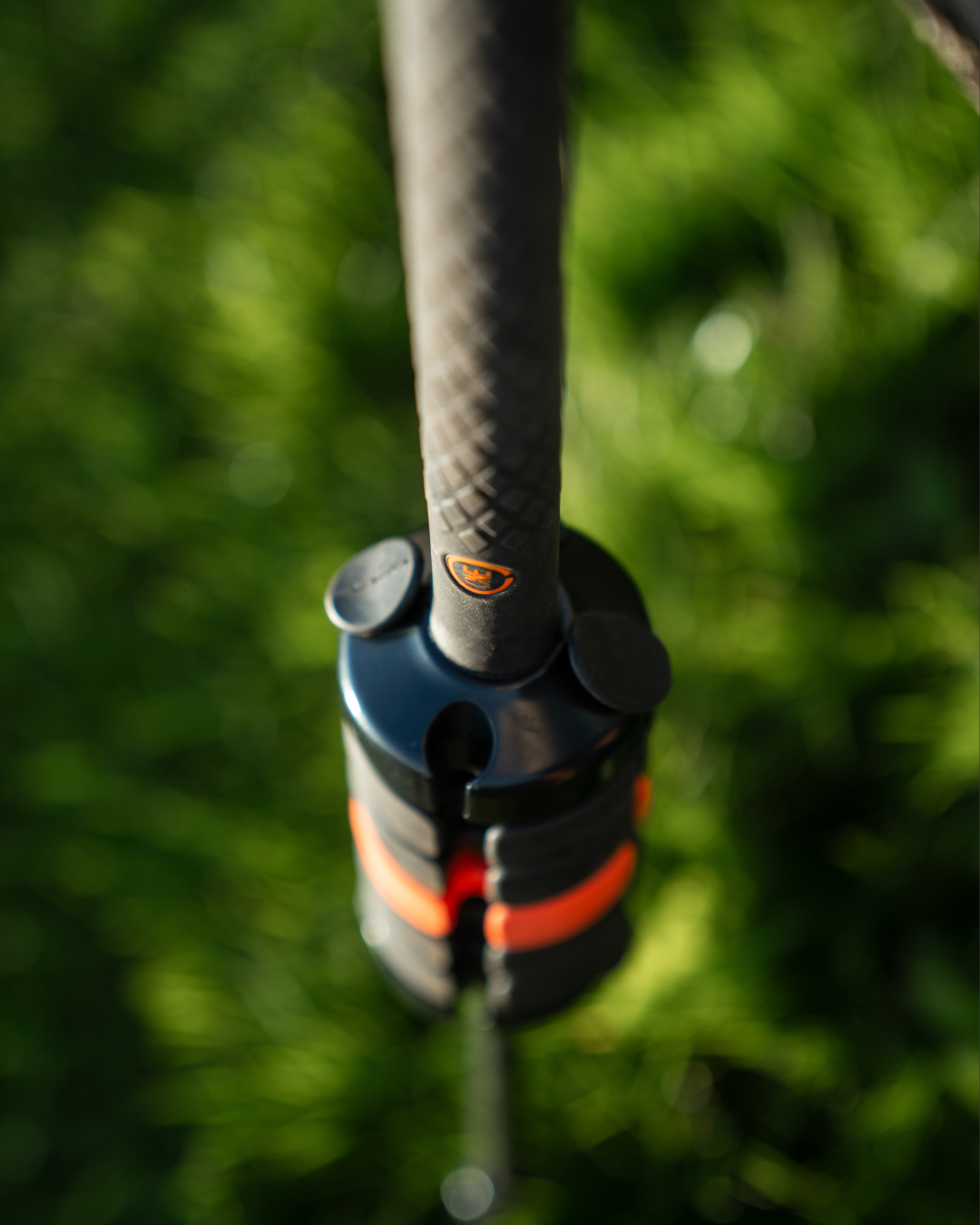
This is also where a weighted training tool earns its keep. A weighted swing trainer like the ONE Club Trainer is useful here because the added load punishes any rushed transition, and the feedback is immediate. If your sequencing is off, the heavy club tells you before your coach does.
Off-season programming: the four-month block amateurs skip
The single biggest difference between how pros and amateurs improve golf swing speed is what they do from October through January. Tour players treat the off-season as a strength-and-power block, programmed by a golf-fitness coach, that is built around three buckets: get stronger, get more explosive, and protect mobility. The National Strength and Conditioning Association has published clear guidance on this kind of block periodization, and per the NSCA's strength and conditioning research, the most productive golf-fitness programs alternate heavy compound lifts with rotational power work twice a week for at least eight weeks.
A typical pro off-season week looks something like this. Two days of lower-body strength built around trap-bar deadlifts, split squats, and hip thrusts. Two days of upper-body and rotational work using cable rotations, medicine-ball scoop tosses, and landmine presses. Two days of overspeed swing work and speed training with a graduated set of weighted and underweighted clubs. One full recovery day. Mobility exercise every day, even if it is only ten minutes.
If you have never done a periodized off-season block, start small. I tell amateur students to pick two strength days a week from November to February, focus on glutes, lats, and core rotation, and add two overspeed sessions a week. Eight to twelve weeks of that workout block, and they walk onto the range in April with three to seven mph more clubhead speed and a noticeably tighter golf game without changing their swing at all. That is not theory. That is what the data on TrackMan shows in my own students' lesson histories.
The Tuesday range session: how tour coaches drill speed
On a Tuesday at any PGA Tour event, you will see speed work happening on one end of the range. The drills are not glamorous. They are repetitive, deliberate, and measured. The three I see most often are step-through swings with the driver, one-arm sequencing drills with a short iron, and overspeed sets using a SuperSpeed-style protocol.
The step-through drill is simple. You set up to a tee, make your backswing, and during the downswing your trail foot walks past your lead foot so you finish off your lead leg with a baseball follow-through. It teaches you to turn your chest hard through impact and use the ground. Pros use this when they feel sluggish at the top of their backswing or when they have started arming the ball.
The one-arm drill, usually done with a 9-iron and the lead arm only, hammers correct hand path and removes any chance of muscling the club. It is brutal at first. After a week, your sequencing will improve more than any swing tip you have ever paid for. HackMotion's wrist-action research shows that the lead-arm-only drill produces measurable changes in wrist flexion and clubface control inside ten sessions.
Overspeed protocols, popularized by SuperSpeed and used by everyone from Bryson DeChambeau to journeyman tour pros, follow a simple structure. Per TrackMan's speed-project data, a graduated set of three clubs, one lighter than your driver, one slightly lighter, and one slightly heavier, swung in alternating fashion at maximum effort for short sets of six swings, can add measurable mph in eight weeks. The work is done three times a week, never on a tournament day, and never as a replacement for skill practice. Speed sessions and skill sessions stay separate.
Recovery is the hidden multiplier
The recovery piece is where weekend golfers leave the most speed on the table. Pros sleep eight to nine hours during tournament weeks, prioritize hydration with electrolytes, and book regular soft-tissue work, whether that is a massage therapist on staff or a physiotherapist on call. They also rotate hard speed work with easy days. A pro never runs back-to-back maximum-effort speed sessions. The nervous system needs forty-eight hours minimum to recover from an overspeed protocol if you want the adaptation to stick.
I drill this into every new player I work with. If you do an overspeed workout on Monday, Tuesday is mobility and a normal range session at 70 percent. Wednesday can be a speed session again. Thursday is recovery or short game. Friday is a measured speed session. Saturday and Sunday are playing days. You cannot bully your central nervous system into more speed. You can only train it and then give it room to adapt. That is the cycle every elite player respects.
Sequencing and the kinetic chain that produces speed
When tour coaches talk about swing mechanics, they almost always come back to sequencing. The correct order is ground-up: the lead heel plants first, then hips begin to open, then the torso unwinds, then the lead arm and hands deliver the club, and finally the clubhead releases through the moment of impact. Every elite player, regardless of style, sequences in roughly that same order. Bryson DeChambeau, who famously chased big gains with strength training and changed his body composition, still produces clubhead speed by sequencing in the correct order. The muscle on top of efficient mechanics, with rotational efficiency intact, is what made the speed jump real for him.
The most important muscles for golf power and speed are the glutes, the lats, the obliques and core, and the muscles around the hips. The glutes are the engine that drives the kinetic chain from the ground, the lats connect the torso to the arms and transfer the power, and the obliques generate the rotational speed. If any of those body parts are weak or inhibited, you leak speed without even feeling it. That is why pros spend so much time on glute activation in the warm-up and on rotational core work in the gym.
Equipment and how it affects the speed you can actually produce
Tour players get fit for equipment on TrackMan and Foresight launch monitors at least twice a year. That is not vanity. The shaft, loft, and head combination that fits a 105 mph swing will rob speed from a 115 mph swing, and the wrong driver setup can cost five to ten yards of carry. A lighter shaft will often increase clubhead speed by one to three mph, but only if your tempo can handle it. If your transition is already quick, a lighter shaft will make your dispersion worse. This is the trade-off your fitter should be measuring, not guessing.
Per USGA equipment standards, every conforming driver has the same legal limit on spring-like effect, so the gains you actually get from new equipment come from fit, not from miracle technology. Get fit. Hit the launch monitor twice a year. Trust the numbers.
What this means for a club golfer chasing speed
You do not need a tour coach to borrow the tour playbook. Build a 30-minute warm-up that progresses from mobility through wedges to driver. Practice tempo with a 3-to-1 count on a 7-iron every range session. Program a real off-season block from October to January with two strength days and two overspeed sessions a week. Use a measurable protocol like SuperSpeed or a weighted trainer. Respect recovery. Get fit for your equipment. Do all of that for one full year and you will be a better golfer with a faster, more efficient swing.
The pros have a system that means longer drives, lower scores, and a swing that holds up over a full season instead of breaking down in August.
Improve golf swing speed questions
Is it possible to increase golf swing speed?
Yes, and the gains are bigger than most golfers expect. A structured eight-to-twelve-week program of strength training, overspeed work, and tempo discipline routinely produces three to seven mph of additional clubhead speed in club-level players, and elite players have added ten to fifteen mph with longer dedicated blocks. The gain is not magic. It comes from getting stronger, training the nervous system to fire in the correct order, and protecting recovery.
What swing speed do you need to hit 250 yards?
Most golfers need roughly 105 to 110 mph of driver clubhead speed to carry the ball 250 yards, assuming a reasonable smash factor of 1.45 to 1.48 and a launch angle in the 12 to 14 degree range. With a poor strike or a mismatched driver setup, the same swing speed can lose 15 to 20 yards. Speed without center contact does not produce distance.
What is the 80/20 rule in golf?
The 80/20 rule in golf says that roughly 80 percent of your scoring improvement comes from 20 percent of your work, usually the short game and putting. Applied to speed, the rule reminds golfers that you do not need to swing as hard as possible on every shot. Swinging at 80 percent of your max produces most of your distance with much better dispersion, and most pros play at that effort level on the course.
What's the 70/30 rule in golf?
The 70/30 rule is a practice-allocation guideline that suggests 70 percent of your range time should go to scoring shots, like wedges and short irons, and 30 percent to long game and driver. It is built on the strokes-gained research that shows scoring tends to be decided inside 150 yards more often than off the tee. The point is not to ignore driver speed work but to keep it in proportion.
How can I increase clubhead speed without losing accuracy?
Train speed and accuracy on separate days. Use overspeed protocols and gym work to raise the ceiling of your maximum speed, then on skill days swing at 85 to 90 percent of that new ceiling. Keep tempo in a 3-to-1 ratio. A training aid like the ONE Club Trainer can help reinforce sequencing during speed work so your timing does not break down when you push the pace, and you preserve accuracy on the course.