
The correct way to swing a golf club follows the same six steps for every shot, from a beginner's first lesson to a tour player's tee shot: build a neutral grip, set up in athletic posture, take the club back with the body (not the arms), complete a full shoulder turn at the top, start the downswing with the hips, and let the club arrive at the ball with a square face on the way to a balanced finish. The order matters more than any single position. Skip a step and the swing breaks. Get the order right and the rest of the motion almost takes care of itself, which is the secret behind how pros make a complicated motion look effortless.
This article walks any golfer, beginner or not, through each step in plain language. It covers grip and stance, the takeaway, the top of the backswing, the transition into the downswing, impact, and the finish. It closes with the most common beginner mistakes and a short drill section to practice the new pattern at home.
Start with a neutral grip
The grip is the only point of contact between a golfer and the club, so it sets the ceiling for everything that follows. A neutral grip for a right-handed player looks like this: the lead hand (left, for a righty) grips the club so that two and a half knuckles are visible looking down at address, and the V formed between the thumb and index finger points toward the trail-side shoulder. The trail hand (right) covers the lead hand so that the lifelines line up, with the same V on that hand also pointing at the trail shoulder.
Pressure should feel like holding a tube of toothpaste with the cap off, firm enough to control the club, light enough not to squirt anything out. Most beginners grip too hard, which kills the wrist hinge and the release. The USGA's grip primer covers the same neutral range, so use it as a sanity check before any lesson. Get this right and the next five steps work. Get it wrong and no amount of swing drill compensates.
Build a stable stance and posture
Stand with your feet shoulder-width apart for a mid-iron, slightly wider for a driver, slightly narrower for a wedge. Weight sits balanced between the heels and the balls of the feet, with knees soft and athletic, not locked. The image I give my own students: stand the way a basketball defender guards an opponent, ready to move in any direction. You'd be amazed how many beginners arrive locked-kneed and tense.
Now bend forward from the hips (not the waist) until your arms hang straight down from your shoulders, with the club sole resting flat on the ground. Your spine should tilt a touch away from the target so the trail shoulder sits slightly lower than the lead one. The two-second posture check I use on the lesson tee: rest your hands on your knees. If you don't feel a mild stretch in the hamstrings, you're standing too upright, and your hips won't rotate freely. Fix that and half the swing problems disappear before the club ever moves.
The takeaway: the first move of the swing
Here's a rule I drill into every beginner: the first eighteen inches of the backswing set the pattern for everything that follows. Move the club, hands, arms, and shoulders together as a single unit. No early wrist hinge. No rolling of the forearms. The clubhead stays low to the ground for as long as the rest of your body lets it. The image I use: imagine pushing a shopping cart, where the body turns and the arms just stay relaxed and along for the ride.
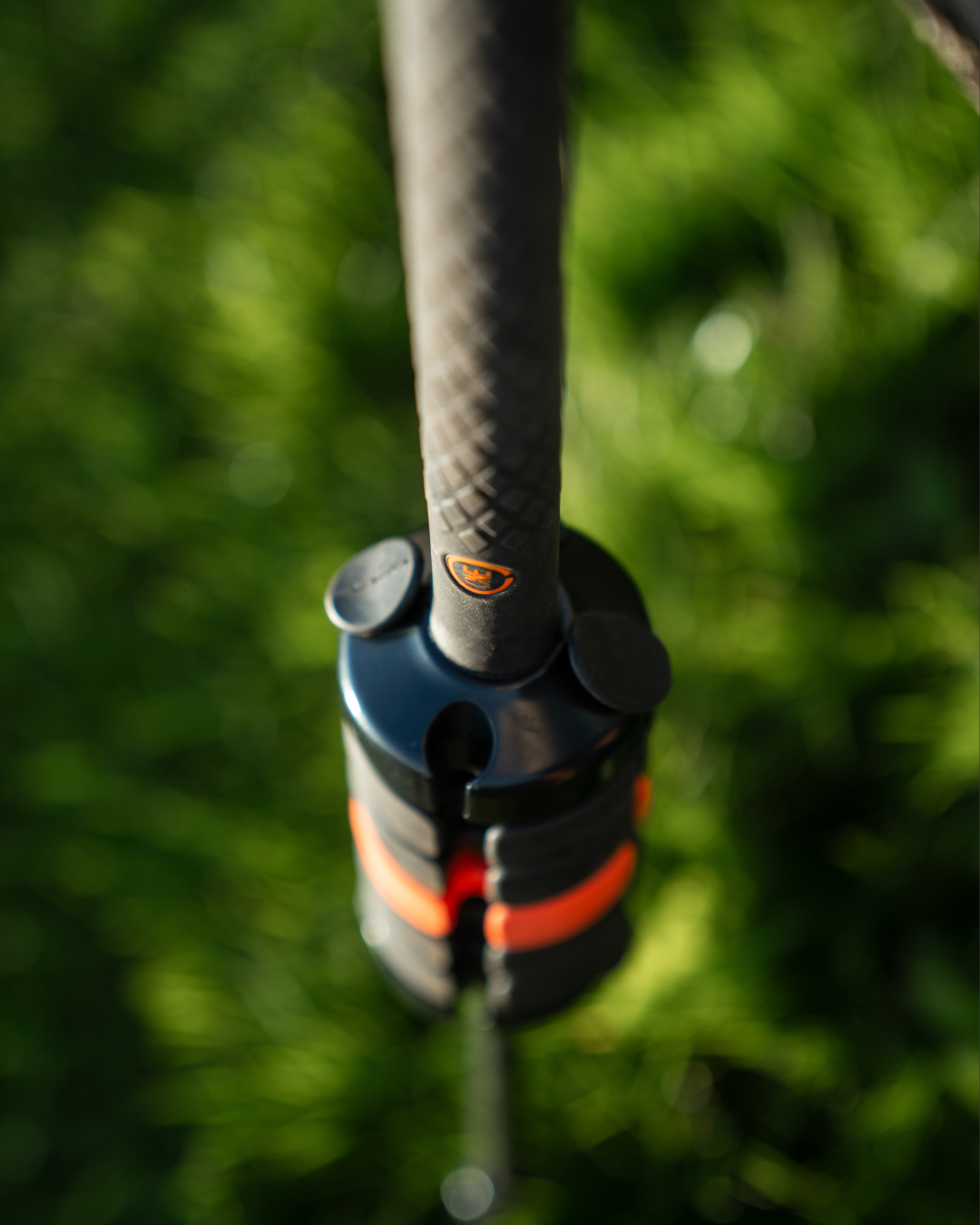
If the takeaway is jerky or arms-dominant, every later position will be a recovery move. A solid golf swing flows in harmony, and using a tool like the ONE Club Trainer in slow practice swings helps you feel this connected motion in a way that sticks. The added resistance makes any arms-only takeaway feel obviously wrong, which is faster feedback than watching YouTube videos of your own swing.
Complete the backswing
From the takeaway, your wrists hinge naturally as the club moves up. Your lead shoulder turns under your chin while the trail arm folds. At the top of the backswing, the lead shoulder should sit behind the ball, the club shaft should be roughly parallel to the ground, and your trail elbow should point at the ground, not flared out behind you. Weight has shifted to the trail side, about 70 percent into the trail heel. Most PGA coaches I know consider this the half-way point in mastering the golf swing, and honestly, if a player can hold this position cleanly, the rest is half-solved.
A simple test: pause for one full second at the top. If you can hold the position without your body swaying or your trail arm flying off your chest, your backswing is loaded correctly. Most amateurs cut the backswing short and try to make up for it with arm speed in the downswing, which is the single biggest cause of inconsistent contact for a beginner.
The downswing transition
The transition from backswing to downswing is where most golf swings live or die, and it is the single part of the golf swing where amateurs lose the most distance. It fires in a specific order: hips first, then torso, then arms, then the clubhead arrives last. This is the kinetic chain, and the Titleist Performance Institute's biomechanics library documents the timing of this sequence across hundreds of tour swings. The consistent finding: the hips begin rotating toward the target while the shoulders are still finishing the backswing turn. That overlap creates the stretch that produces effortless speed.
The cue most teachers give beginners: feel like your lead foot fires into the ground first. The pressure shift starts the chain. The torso follows because it has nowhere else to go. The arms come through last. If you feel like your arms or hands are starting the downswing, the swing is upside down. Practicing this repeatedly with the ONE Club Trainer turns a scattered motion into something fluid, balanced, and confident, giving you the kind of swing you can repeat under pressure.
Impact and follow-through
At impact, the body has rotated through about 30 to 40 degrees more than at address, the hands have returned to a position just slightly ahead of the golf ball, and the clubface points at the target with a slight downward angle of attack for an iron or a slight upward angle for a driver. The arms have extended fully, the chest is opening toward the target, and the trail heel is just beginning to come off the ground. Clean ball striking depends on these small details lining up at the same moment.
From there, the follow-through is mostly continuation. The arms swing past the body, the trail shoulder finishes under the chin (the mirror of where the lead shoulder was at the top), and the weight stacks fully on the lead leg. The trail toe ends pointing down. A balanced finish that holds for three seconds is the tell that everything before it worked. If you stumble, something earlier in the sequence broke.
Common beginner mistakes
Three errors account for most of what goes wrong when a beginner learns how to swing a golf club. The first is the death grip: squeezing the club so hard that the wrists cannot hinge. The second is the all-arms takeaway: trying to muscle the club back instead of turning the body. The third is the upside-down downswing: starting the move from the arms instead of the hips.
Fix any one of those and the swing improves immediately. Fix all three and a brand-new player can hit a clean shot on the first session. WikiHow's beginner instruction on how to swing a golf club covers a similar set of beginner-friendly steps and is a useful second source if you want to compare cues. The ONE Club Trainer is designed to give beginners instant cues on whether they have released at the right moment, which short-circuits most of the trial-and-error a new golfer would otherwise go through.
Practice this at home with a simple drill
You do not need a range to groove the new pattern. Five minutes a day with the right drill builds the motor pattern faster than an hour on the range hitting random balls. The drill: stand in your normal address, take a slow backswing to the top, pause for two seconds, then start the downswing by feeling the lead foot fire into the ground. Stop again at impact, check your position (hands ahead of the ball, chest open), then finish.
Twenty repetitions of that pause-drill, three times a week, will rewire the sequence faster than any pure ball-hitting session can. A weighted swing trainer makes the drill even more effective because the resistance exposes the moment any phase breaks down.
How to swing a golf club questions
What is the correct way to swing a golf club?
The correct order is grip, posture, takeaway, backswing, downswing transition, impact, and finish. Each phase depends on the one before it, and rushing any of them makes the rest of the swing harder. A neutral grip and a connected takeaway are the two phases that pay back the most for a beginner.
How do pros swing so effortlessly?
Pros use the body, not the arms. The hips lead the downswing, the torso follows, and the arms come through last. That kinetic-chain sequence is what makes a 110 mph swing look smooth instead of forced. Amateurs who try to muscle the club with the arms always look like they are working harder for less speed.
What is the proper way to swing your golf irons?
The same sequence applies, but the angle of attack is slightly downward (the club strikes the ball first, then the turf). Ball position sits a little further back in the stance for short irons, in the middle for mid-irons, and just inside the lead heel for long irons. The setup change is small but real.
How long does it take a beginner to learn the swing?
Most beginners can produce a clean contact within four to six lessons of focused instruction with a PGA coach if they work on grip and sequence first. A repeatable swing that holds up under pressure and produces consistent golf shots takes more like six to twelve months of practice. The best golf coaches will tell you it is faster to learn well from the start than to fix bad habits later, and that mastering the basics in the first few sessions beats trying to copy a tour move from YouTube.