
Adding real, lasting swing speed takes about 12 weeks of structured work, and the gains come in predictable stages: a small bump in week 2 from rhythm and mobility, a measurable 3 to 5 mph by week 4 as your nervous system adapts to overspeed reps, a strength-driven climb through weeks 6 and 8, and a consolidation phase by week 12 where the new top end shows up under tournament pressure. I have coached players from junior level to mid-handicap club members for a long time, and the pattern repeats. The golfers who track the calendar, not just the clubhead speed number on a TrackMan or SuperSpeed radar, are the ones who break through.
This guide is the timeline I hand my students when they ask how to increase swing speed in golf. Other articles cover the systems. What you are about to read is the schedule those systems live inside. I will walk you through what to expect at week 2, week 4, week 6, week 8, and week 12, what counts as real progress, what a plateau looks like, and how to adjust.
What really creates swing speed in golf
Speed in the golf swing comes from three places stacked on top of each other: ground force, rotational sequencing, and a trained nervous system that lets you fire those first two near maximum. Mobility lets the backswing load fully so the spine can stay tilted while you rotate. Strength gives the lower body something to push against. Overspeed work teaches the brain it is allowed to move that fast without a heavier club in your hands deciding the speed for you. Take any one of those fundamental pieces out and the ceiling drops. That is why a heavier club drill on its own rarely works, why pure gym work without speed reps stiffens players up, and why technique fixes without an athletic base just rearrange the deck chairs. Generating speed is a total body skill, not a single fix.
TrackMan's swing data archive shows that a 100 mph driver swing produces around 148 mph of ball speed with a centered strike, and that the same player at 110 mph picks up roughly 25 yards of carry, according to TrackMan's published swing-data archive. Mark Broadie's strokes-gained framework, summarized at broadiegolf.com, puts a number on it: roughly 0.025 to 0.030 strokes saved per extra yard of driving distance, compounding round after round.
Week 2: the rhythm and mobility window
The first signal that the program is working shows up around day 10 to day 14, and it almost never looks like raw mph. What you feel is a quieter takeaway, a backswing that finishes without strain, and a transition that does not rush. Mobility moves the dial first because most amateurs are leaving 20 to 30 degrees of available shoulder turn on the table. The Titleist Performance Institute's screen, described at mytpi.com, walks a coach through exactly which restrictions kill clubhead speed, and the seated trunk rotation and toe touch tests are the two I run first with every new player.
What to expect at week 2: a 1 to 2 mph bump on the radar, mostly from a fuller turn and a calmer tempo. Your warm-up routine should already feel different. You should be able to take five practice swings without your lower back tightening up.
What a plateau looks like at this stage: same number as day one, same stiffness, same rushed transition. If that is you, the issue is volume of mobility work, not your golf swing. Stop adding drills. Double your stretch sessions, twice a day, fifteen minutes each, and recheck on day 14.
Week 4: nervous system unlocks and the first real jump
Week 4 is the breakthrough week for most students. By this point you have run overspeed protocols three times a week for a month, swinging a graduated set of weighted clubs, lightest to heaviest, in the order SuperSpeed lays out at superspeedgolf.com. The nervous system is the limiting factor for most amateurs, and four weeks is roughly how long it takes for your brain to accept a new top speed as safe. The yellow stick (the lightest) is doing the heavy lifting here. It is teaching your body to swing faster than you ever have, without a clubhead at the end punishing the effort.
What to expect at week 4: 3 to 5 mph of clubhead speed gain on the driver, measured cold, not after a warm-up routine. Ball speed gains lag a beat because solid contact takes a few sessions to catch back up. Expect a temporary dip in fairways hit. That is normal. Your eyes have not learned the new path yet.
Signs of progress that are not the number on the radar: you can swing the green stick (the medium club) faster than you used to swing your driver, you finish in balance after a max effort swing, your non-dominant side reps feel less awkward than they did in week 1.
Signs of plateau: zero mph movement after 12 overspeed sessions. If that is you, you are not actually swinging hard. Most amateurs say they are giving 100 percent and the radar says otherwise. Have a friend film you. Compare the speed of your hands against your week 1 video. If they look the same, the fix is mental, not mechanical.
Week 6: strength catches up
Around week 6 the strength and power work starts to show. Two heavy lower body sessions a week, deadlifts or trap bar pulls, split squats, weighted carries, paired with rotational medicine ball throws, build the engine that lets you keep the week 4 nervous system gain instead of bleeding it back. I have my players in the 3 to 5 rep range for the main lifts, with a real focus on intent on the medicine ball work. Throw it like you mean it. Slow ball throws build slow swings.
What to expect at week 6: an additional 2 to 3 mph on top of the week 4 number. Carry distance should now be visibly different. If you carried your driver 240 in week 1, you should be touching 255 to 260 on the same launch monitor.
What a plateau looks like at week 6: no change since week 4, soreness that never resolves, sleep getting worse. That is overtraining. Cut the strength work to one session a week for ten days, keep the overspeed reps but drop one set, and the speed will come back.
Week 8: technique catches the new athlete
By week 8 you have a faster, more athletic player on your hands, and your old swing mechanics are starting to leak. This is the week to film the golf swing again and compare it to week 1. The hips are firing earlier. The clubhead is lagging more in the downswing. You may be losing a little speed at impact because your face is not catching up. This is where technical adjustments earn their keep. Sequencing drills, the step-through drill, and pump drills work here because they teach the lower body to lead without the upper body chasing, and they straighten out the rotational pattern so energy transfer is not wasted. Hackmotion's wrist-drill library at HackMotion is what I send my players to for the wrist work that keeps the clubface square when the total body is suddenly moving faster than it used to.
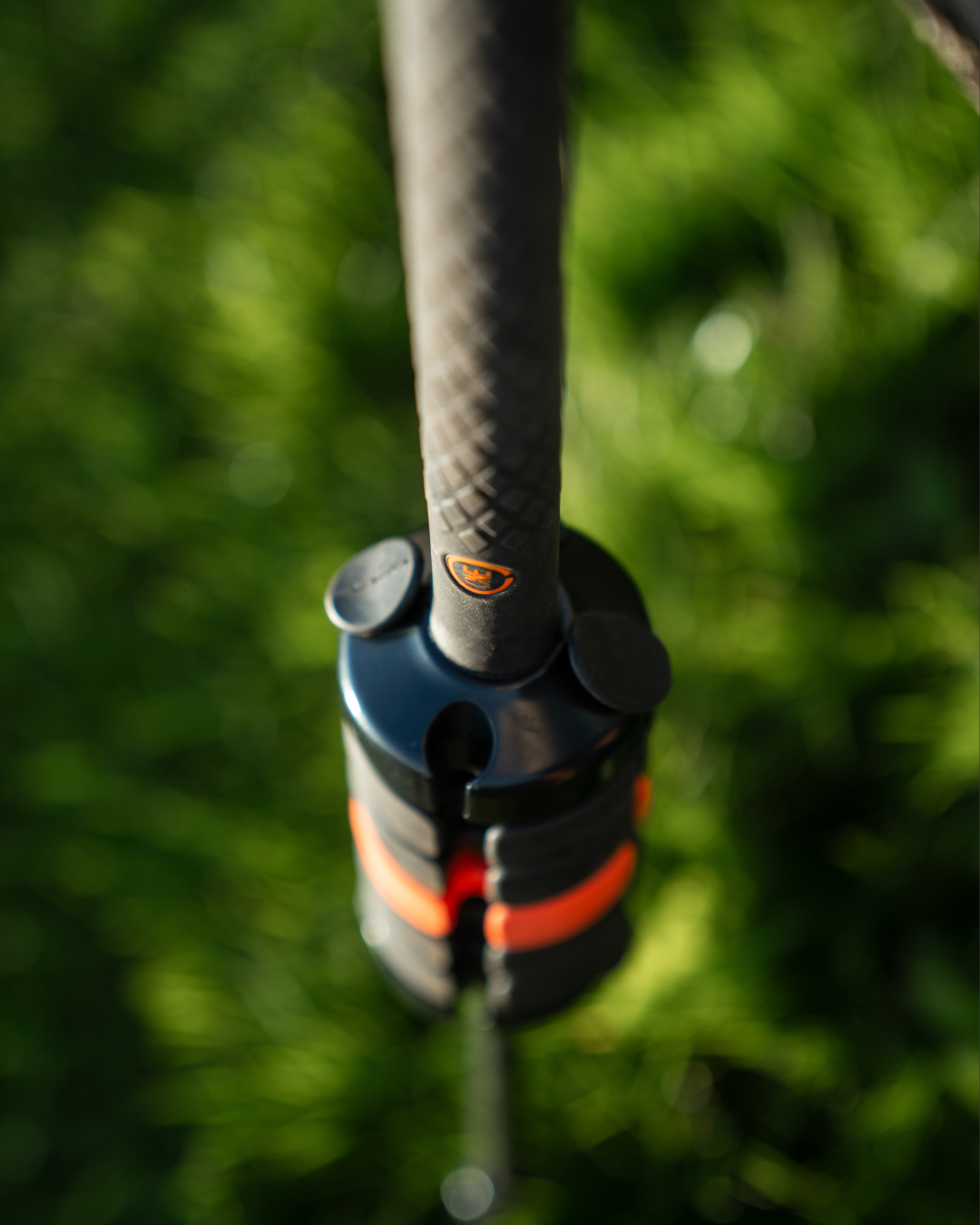
A weighted swing trainer like the ONE Club Trainer is useful at this stage because the added load punishes any rushed transition and makes the new sequencing pattern feel natural. I use it as a slow-tempo tool, not a speed tool, in week 8. Three sets of ten controlled swings, focused on the lower body leading.
What to expect at week 8: clubhead speed flat or up another 1 to 2 mph, ball speed catching up to clubhead speed, smash factor returning to 1.45 or higher, fairways hit climbing back to or above your baseline.
Signs of plateau: clubhead speed up, ball speed nowhere. That is a strike problem, not a speed problem. Hit balls off a tee with the driver, focus on a clean low point, and the ball speed will come.
Week 12: consolidation, and what shows up on the course
Weeks 9 through 12 are the consolidation phase. You drop the overspeed volume from three sessions a week to two, you keep strength training at two sessions a week, you start playing more rounds. The point of this phase is to take the new top speed and make it your normal speed on the course. Most golfers gain speed on the range and lose it under tournament pressure. The fix is simple: speed reps before every round, two warm-up swings with the heaviest weighted club, two with the lightest, then your normal warm-up.
What to expect at week 12: a stable 6 to 10 mph total gain over your week 1 baseline, on-course speed within 2 to 3 mph of range speed (it is always a little slower under pressure), and a carry distance that holds up over 18 holes instead of dropping off after hole 10. Your wedge game gets sharper here because you are hitting shorter clubs into greens. The short game numbers improve without you working on the short game. That is the compounding benefit of speed.
Signs you are done with phase one and ready for phase two: three rounds in a row where the driver speed matches the range, no soreness in the lower back the day after a round, and a consistent shot pattern. That is when you move to a maintenance block, one strength session and two overspeed sessions a week, and start the next 12 week block aimed at the next 5 mph.
How to track progress without lying to yourself
Buy a personal radar. A PRGR or a Garmin R10 is enough. Take a baseline number in week 1, cold, no warm-up, ten swings, throw out the high and the low, average the rest. That is your real number. Repeat the exact same protocol every two weeks. Same time of day, same club, same shoes. If you only measure after a warm-up routine when you are already loose, you will fool yourself into thinking you have gained more than you have. The cold number is the one that shows up on the first tee.
If you want to add carry distance and ball speed to your tracking, go ahead. I would not bother with spin rate yet. Get speed up first, then chase efficiency.
Common mistakes that flatten the curve
The biggest mistake I see is golfers swinging hard on the course in week 2 because they got excited. Speed training is a separate session from playing golf. On the course, swing within yourself, hit fairways, score. In the training session, swing fast and miss. Mix those two and you will hit nothing.
The second mistake is skipping the non-dominant side reps in the overspeed protocol. They feel awkward and they are the reason the program works. Skipping them skips the part that teaches your nervous system to fire both sides equally.
The third mistake is buying a heavier club and waving it around with no plan. A heavier club used alone slows you down. It must be paired with the lighter sticks. That is the point of overspeed: train both ends, and the middle moves.
What a typical week looks like
Monday: overspeed session, three sets of three reps each stick, both sides. Tuesday: heavy lower body lift plus rotational medicine ball throws. Wednesday: mobility and a short game range session. Thursday: overspeed session. Friday: full body lift, focused on power. Saturday: play 18. Sunday: overspeed session, then rest. That is the rhythm for weeks 4 through 8. Three overspeed sessions, two lifts, one full round, one rest day, every week, for 12 weeks. That is the program.
How to increase swing speed in golf questions
How to generate more swing speed in golf?
Stack three systems: mobility for a fuller turn, strength training for ground force, and overspeed reps to teach the nervous system to fire near maximum. None of the three works in isolation. Add measurement so you can see what is moving and what is not.
What is my swing speed if I hit a 7 iron 150 yards?
A 150 yard 7 iron carry usually means a driver swing speed around 85 to 90 mph for an average golfer, give or take based on strike quality and launch conditions. If your 7 iron goes 150 and your driver only goes 220, you have a sequencing or strike issue, not a speed issue. Speed is there. You are not getting it to the ball.
Is 85 mph swing speed slow?
For an average male amateur, 85 mph is below average. The PGA Tour average sits north of 115 mph, and a competitive male club golfer is in the 95 to 105 range. For women golfers, 85 mph is right around the LPGA Tour average. Slow is relative to your category and your goals. If you want to break 90, get to 95 mph. If you want to break 80, get to 100 mph.
What is the 70/30 rule in golf?
The 70/30 rule generally refers to weight distribution at impact: roughly 70 percent of your weight should be on your lead leg as the club arrives at the ball, with about 30 percent still on your trail side. This pressure pattern is what creates the ground force that the upper body translates into clubhead speed. If you stay on your trail side at impact, you cap your speed at whatever your arms alone can produce, which is not much.
What is the best drill at home to swing faster?
Step-through drills with a light alignment stick. Take a normal stance, make a full swing, and step through with your trail foot as the club passes impact. Three sets of ten on the dominant side, three sets of ten on the non-dominant side. It costs nothing, takes ten minutes, and teaches the lower body to fire and the body to finish in balance. Pair it with a structured overspeed program and you have the home version of the 12 week plan.