
A perfect backswing in any golf swing is built on five non-negotiables: a connected takeaway that moves the club, hands, and shoulders together for the first 18 inches; a full shoulder turn with the lead shoulder behind the ball; a wrist hinge that loads naturally without forcing; weight shift to about 70 percent of the trail side; and a club shaft that arrives parallel to the ground at the top, pointing along the target line. Get those five right and the downswing almost takes care of itself. The most useful tip I can give any golfer is to stop thinking about the backswing as a separate motion and start treating it as the rotation that loads everything that follows. Most amateurs break one or two of the five without realizing it, which is why the same swing produces wildly different results from one shot to the next.
This guide walks through each of the five essentials in the order they matter, the common faults that break each one, the drills coaches use to lock the correct positions in, and how the backswing actually sets up the downswing that follows. It closes with the questions I hear most about backswings on the lesson tee.
The five essentials of a great backswing
Watch any tour player in slow motion and these five elements show up every single time, regardless of personal swing style. They're not a swing model. They're the physics of producing repeatable speed with a club in your hand.
One: a connected takeaway. The club, hands, arms, and shoulders move together as a single piece for the first 18 to 20 inches. No early wrist hinge. No forearm roll. The trail elbow stays close to the trail side of the rib cage. This is the foundation that everything else builds on, and it's also the most commonly broken essential I see on the lesson tee.
Two: a full shoulder turn. By the top of the backswing, the lead shoulder should sit behind the golf ball (for a right-handed player). The chest has rotated about 90 degrees from address. Most amateurs stop turning the body at about 60 to 70 degrees and use the arms to finish the backswing, which is the single biggest power leak in amateur golf.
Three: a natural wrist hinge. The wrists hinge as the club moves up, not because you force them to, but because the weight of the clubhead falling against the lead-hand grip naturally levers them up. At the top, the lead wrist should be flat (not bowed, not cupped) and the trail wrist should be hinged about 90 degrees.
Four: weight shift to the trail side. About 70 percent of your weight should sit on the trail foot at the top of the backswing, balanced primarily over the trail heel and instep. If you reverse-pivot and keep weight on the lead side at the top, you've lost the coil that the downswing needs to release.
Five: club shaft position at the top. The shaft should sit roughly parallel to the ground for a full driver swing, slightly shorter for iron swings. The butt of the club should point along the target line or just slightly inside it. If the shaft is across the line, you'll come over the top. If it's laid off (pointing way left for a right-hander), you'll get stuck inside on the way down.
Common backswing faults and how to spot them
I keep a mental list of the faults I see most often, and three top the list every season. The first: an early wrist hinge in the takeaway. The hands pick the club up off the ground in the first foot, the club gets behind the body too fast, and the backswing turns into an upright arm-lift. The second: a reverse pivot, where the player keeps weight on the lead side at the top, often because the upper body is tilted toward the target instead of away from it. The third: a "false top," where the player thinks they've made a full shoulder turn but actually stopped the turn early and finished with the arms. The arms feel high. The shoulders barely moved. Power leaks everywhere.
Diagnosing your own backswing is straightforward with a phone. Film one video from down-the-line (behind you, looking at the target) and one from face-on (your trail side). Watch the two recordings at half-speed. The down-the-line view exposes takeaway path and shaft position. The face-on view shows weight shift and shoulder turn. Most amateurs need to see only a few swings to spot which of the three faults applies to them. There are good free YouTube tutorials on this self-diagnosis from instruction channels like Me And My Golf if you want a guided walk-through.
Drills that actually perfect the backswing
Each fault has a drill that fixes it within a session or two if you commit to it. None of these require equipment beyond what you already own.
Drill for an early wrist hinge: the towel-under-the-arms drill. Tuck a small towel under both armpits and make slow practice swings. If your arms separate from your body during the takeaway (which is what forces the early hinge), the towel falls out. Aim for 20 slow swings in a row where the towel stays in place all the way to the top. This single drill fixes more takeaway problems than any other.
Drill for a reverse pivot: feet-together swings. Set up with your feet touching each other, then make a full swing. The narrow base forces your body to coil over your trail foot or you'll fall over. Hit 15 wedge shots this way at half-effort. Once it feels stable, widen the stance back out and the proper weight shift transfers automatically.
Drill for a false top: shoulder-turn against a wall. Stand with your back to a wall, about a foot away. Make a slow backswing and try to get the back of your lead shoulder to touch the wall. If you can't, your shoulder turn isn't complete. Practice the move daily for a week and the full turn starts to feel like the default.
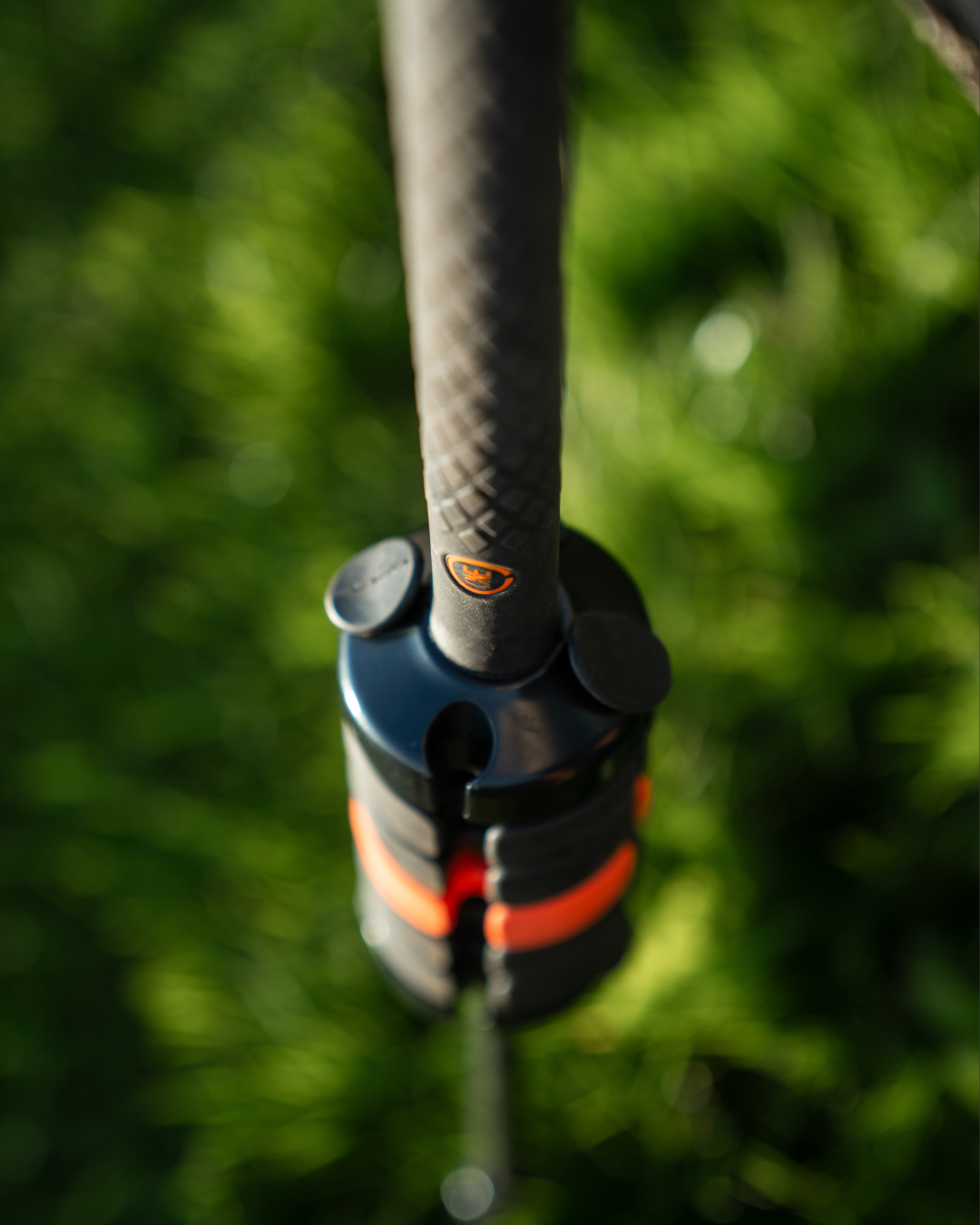
For amateurs willing to invest 10 minutes a day at home, a weighted swing trainer is worth the time. A tool like the ONE Club Trainer adds load that punishes any arms-only or under-turned backswing because the extra weight makes the wrong sequence physically harder to execute. Players I work with often see their backswing positions clean up within two weeks of consistent use.
How the backswing sets up the downswing
This is the part most amateurs miss. The backswing isn't a separate motion. It's a loading mechanism for what comes next. Every position you reach at the top is a setup decision for the downswing that follows. A short backswing forces you to manufacture speed with the arms. A reverse pivot kills the ability to push off the lead foot. A laid-off shaft at the top forces you to come over the top to avoid blocking the ball right. Titleist Performance Institute's biomechanics library documents this loading sequence across hundreds of tour-level golfers, and the data consistently shows that a complete shoulder rotation in the backswing is the single biggest predictor of repeatable clubhead speed.
The flip side: a well-built backswing makes the downswing feel almost automatic. The body has already stored the rotational energy. The weight is on the trail side waiting to fall back. The club is in a slot where it can deliver squarely. All the downswing has to do is unwind in reverse order, hips first. Players who feel like they "have to swing harder" almost always have a backswing problem, not a downswing problem.
How long does it take to perfect your backswing?
Most amateurs see real change in two to three weeks of focused drill work. Full ingrainment, where the new pattern holds up under tournament pressure, takes more like two to three months. The honest reality: the old pattern doesn't disappear immediately. Under stress, the body defaults to whatever it's repeated most often, which is why the new pattern needs to be repeated more often than the old one for a long enough period.
What I tell my students: trust the timeline. Scores often get worse for the first week as the new pattern feels foreign. Then they drop steadily as it becomes automatic. The players who panic and abandon the changes after a few bad rounds are the ones who never get the benefit. The players who stick with it for a month almost always end up with better swings than they've ever had.
Perfect golf backswing questions
What is the perfect golf backswing position at the top?
The lead shoulder is under the chin, the back is facing the target, the club shaft is roughly parallel to the ground, the lead wrist is flat, and weight has shifted about 70 percent to the trail side. Hold that position cleanly for one second and you've nailed the top.
How long should my golf backswing be?
Long enough that the lead shoulder turns behind the ball and the shaft reaches roughly parallel for a full driver swing. Trying to swing past parallel almost always introduces faults. A controlled three-quarter backswing that completes the turn produces more consistent results than an overswing that loses control.
What's the most common backswing mistake?
An early wrist hinge in the takeaway, which sets up everything that goes wrong afterward. The club gets behind the body too soon, the shoulder turn stops short, and the arms have to do all the work. Fix the takeaway and the rest of the backswing usually falls into place on its own.
Will a swing trainer help my backswing?
Yes, especially if your fault is taking the club back with the arms instead of the body. A weighted trainer adds load that the arms alone can't move efficiently, which forces the body to engage and creates the connected takeaway most amateurs are missing. Ten minutes a day, three days a week, for a month is usually enough to see the difference.