
The fastest way to improve golf swing timing is a short rotation of five drills practiced for ten minutes a day: pause at the top, half-swings, a counted tempo, the two-ball drill, and an acceleration drill that finds your natural rhythm. Together they retrain the order in which the body fires so the hips lead, the arms follow, and the clubhead arrives last. Good timing is not a feeling, it is a measurable ratio: the best PGA Tour swings show a 3-to-1 backswing-to-downswing ratio, and any drill that grooves that ratio shows up in better contact and tighter dispersion almost immediately.
This guide walks through each of the five drills, in the order most coaches teach them, with the cues that make them stick. It closes with how to tell that your timing is actually improving (without a launch monitor) and the questions golfers most often ask about training tempo.

Why timing matters more than raw power
Timing is the order in which the body parts fire during the downswing: the hip leads, then the torso, then the arm and the wrist, then the clubhead. Power without timing produces fast misses, especially when the upper body fires too early. A golf swing that fires in the right sequence releases stored elastic energy at exactly the moment of impact, which is what separates a smooth-looking tour swing from an over-the-top amateur swing. The lower body has to lead, the upper body has to follow, and that order has to be consistent. HackMotion's research on tempo shows the consistent 3-to-1 ratio across pros at every level, from wedge shots to driver swings.
Tempo is the speed of the whole motion, but timing is the order of events inside it. Two golfers can have identical tempos and very different timing. Training golf swing timing drills well almost always improves tempo as a side effect, but training tempo without timing fixes nothing. Most amateurs who struggle with consistency have a timing problem, not a tempo problem.
Drill 1: Pause at the top
The pause-at-the-top drill is the single most useful timing drill for most amateurs. Setup: take your normal address, take your normal grip, swing slowly to the top of your backswing until the club is parallel to the ground, and freeze for a full two seconds before starting down. Then complete the swing at normal speed. Repeat for sets of ten practice swings at a time. Most coaches recommend incorporating this drill into a pre-shot routine on the range.
The pause forces the body to fully complete the backswing before the downswing fires, which kills the most common amateur timing fault (the "over the top" move where the shoulders open before the hips). It also lets a golfer feel the weight transfer happen in the right order, because there is no momentum to hide a bad transition behind. Two weeks of this drill, ten reps a day, will fix more timing problems than any other single piece of practice.
Drill 2: Half-swings
Half-swings are the bridge between feel and full motion. The drill: hit wedge shots and short irons at 50 percent of your normal swing length, going only to a 9 o'clock position on the backswing (arm parallel to the ground) and a 3 o'clock position on the follow-through. Hit ten shots per club, starting with a wedge and working up to a 7-iron. Casting the club from the top is one of the most common timing faults this drill exposes immediately.
Slowing the motion down exposes timing breakdowns that disappear at full speed. If the hips are not leading the arms, half-swings will produce thin or pulled shots immediately. Fix the sequence at half speed and the full swing fixes itself, because the body has learned the order it needs to fire. Players who turn their hips first see ball striking improve within a single range session.
Drill 3: The counted tempo
Most coaches teach a simple tempo count: "one, two, three" on the backswing and "one" on the downswing. That mirrors the 3-to-1 ratio that PGA Tour data shows for almost every elite golfer. Try it: count out loud or in your head as you swing. Backswing takes three beats, downswing takes one. The drill works for any club because the ratio holds regardless of swing length.
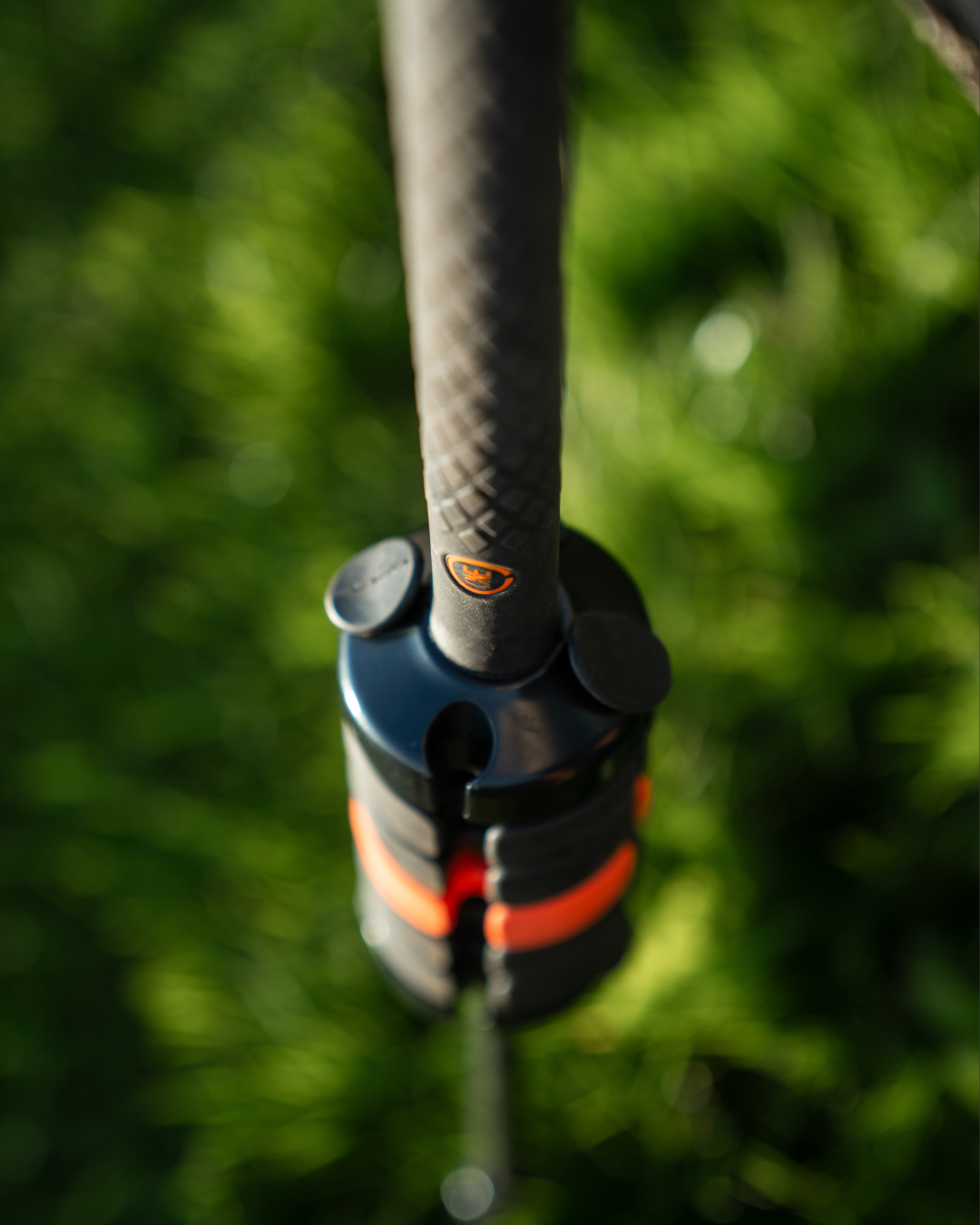
A weighted swing trainer makes counted tempo work even better because the added resistance forces the body to commit to each beat. The ONE Club Trainer is one of the tools coaches use for this exact drill, since the cylinder's weight makes a rushed downswing physically harder to execute. The audio cue from the cylinder reinforces the timing the count is trying to teach.
Drill 4: The two-ball drill
The two-ball drill is the classic tempo drill, popularized in MyGolfSpy's tempo drill guide and used by tour coaches for decades. Setup: place two range balls about a foot apart on the ground. The first ball is the one you hit. The second ball sits a foot in front of it on the target line.
Swing through the first ball and try to brush the second ball with your clubhead as it continues toward the target. The drill builds extension through impact, which is impossible without correct timing. A poorly-sequenced swing will leave the second ball untouched because the club will have already wrapped around the body too early.
Drill 5: Acceleration and finding your feel
The acceleration drill is the final step. Hit three shots in a row with the same club: the first at 70 percent, the second at 85 percent, the third at full swing speed. The goal is identical tempo and identical timing across all three. Most amateurs accelerate the downswing more than the backswing as effort goes up, which breaks the ratio. Keeping the ratio constant from 70 percent to 100 percent is the test.
This drill is the best way to find your natural rhythm. Every golfer has a slightly different tempo, and forcing yourself into someone else's timing rarely works. A two-week practice routine built around this drill teaches the body where its own rhythm sits, and from there every shot starts to feel automatic. The added confidence from a consistent tempo carries over from the tee box to the fairway and helps a player relax the tension in the arms and shoulders that often creeps in under pressure.

How to know your timing is improving
You do not need a launch monitor to see if timing is improving. Three signs show up on the range or course within two to three weeks of consistent drill work: contact moves toward the center of the clubface, ball flight becomes more predictable shot to shot, and the finish position becomes balanced enough to hold for three seconds without rocking back.
The single best on-course test: watch where divots point on a normal swing. Good timing produces divots that point at the target. Bad timing produces divots that point left of the target (for a right-handed player) because the shoulders have opened before impact. Divot direction is the cheapest swing-feedback signal in golf and it costs nothing to use.
Golf swing timing drill questions
What are the most effective drills to improve golf swing timing?
The pause-at-the-top drill, the half-swing drill, and counted tempo are the three most reliable. They cover the three areas where timing actually breaks down: transition (pause), sequence (half-swings), and rhythm (count). Any of them, practiced ten minutes a day for two weeks, will produce measurable change.
What is the 3-to-1 ratio in golf?
The backswing-to-downswing ratio measured on tour-level swings, regardless of club. The backswing takes three units of time and the downswing takes one. The ratio holds for any tempo, fast or slow. Training a counted "one-two-three, one" pattern grooves it directly.
How long does it take to fix bad timing?
Two to four weeks of focused drill work for measurable change. A fully repaired sequence under pressure takes more like three months of consistent practice. The body has to unlearn the old pattern as much as it has to learn the new one, which is why short, daily drill sessions beat long range sessions.
Can a swing trainer actually help with timing?
Yes, because timing problems are easiest to feel when something is loading the swing. Weighted trainers like the ONE Club Trainer make a rushed transition physically obvious. The body cannot fake good timing under resistance the way it can with a regular club, so the feedback is faster and the correction sticks. Most coaches incorporate one as a regular tip in their lessons because the audio cue from the cylinder works as a real-time video replacement, helping a golfer master the move without needing to film every swing.
How does timing affect ball-striking consistency?
Consistent timing produces consistent contact. When the body fires in the same order swing after swing, the club arrives at the ball from a repeatable path and angle, so ball-striking moves toward the center of the face. Players with inconsistent timing tend to see one good shot followed by three poor ones because the sequence varies from swing to swing. Two weeks of golf swing timing drills almost always tighten that dispersion.
Where in the swing does timing usually break down?
The transition from backswing to downswing is where most amateurs lose timing. The away-and-down-swing sequence has to overlap (hips starting forward while shoulders are still finishing back), and amateurs who fire everything at once destroy that overlap. The pause drill targets this exact moment.