
Golf swing speed training works best when it follows a 12-week program. The first four weeks build mobility and movement quality. The next four weeks build strength to grow the engine. The last four weeks use overspeed training to teach the body to swing faster. Skip any of those phases and you'll do speed work for months without the mph gains. Tour players like Bryson DeChambeau and Cameron Champ built their distance jumps on this kind of phased plan. They didn't rely on one magic drill. Average amateurs who follow the same template add 3 to 7 mph of clubhead speed in a season. That works out to 8 to 18 yards off the tee.
This guide walks through each phase of a 12-week speed-training program. It covers what gear matters (and what doesn't), how to test progress without a launch monitor, and the top mistakes that stall speed gains. It closes with the upkeep plan to hold those gains across many seasons.

Why a structured program beats random speed work
Most amateurs do speed training the way I did when I first got into coaching. They grab a weighted club. They swing it as hard as they can ten times. Then they go hit balls. That builds nothing you can measure. The body needs steady overload to adapt. SuperSpeed's overspeed research spells out the science. Speed gains need a set stimulus, a set frequency, and a set length of time. Random work doesn't add up.
The 12-week plan works because each phase sets up the next one. Mobility grows the range of motion the swing can use. Strength gives the body the engine to drive that range. Overspeed forces the nervous system to fire at higher speed. Try overspeed work before the mobility and strength are in place, and the body will hit a ceiling fast. That usually happens within two or three weeks.
Phase 1: Mobility and movement quality (weeks 1 to 4)
The first four weeks build the range of motion the speed phases will use. The focus is hip rotation, thoracic spine mobility, shoulder mobility, and ankle dorsiflexion. These are the four spots where amateurs tend to be most tight. Any one of them limits how much rotation the body can make.
The routine I give my players: 15 minutes a day, six days a week. Drills include 90/90 hip rotations, thoracic spine windmills, shoulder dislocations with a band, and weighted ankle dorsiflexion holds. Titleist Performance Institute's fitness library covers each one with video. It's one of the best free sources for golf-specific mobility work.
You'll know phase 1 is working by week 4. Your shoulder turn at the top of the backswing should feel deeper. Your hip rotation through impact should feel more sharp. If neither has changed, add two more weeks to phase 1 before you move on.
Phase 2: Strength training (weeks 5 to 8)
The middle four weeks build the engine. Speed comes from force, and force scales with muscle strength. The lifts that matter most for golf are squat variations (back squat, goblet squat, split squat), Romanian deadlifts for the posterior chain, rotational medicine ball throws for power, and core work like side planks and Pallof presses.
Three strength sessions a week, 45 to 60 minutes each. Keep at least one rest day between sessions. The plan I use with my players: 4 sets of 6 reps on the main lift, 3 sets of 8 to 10 on the helper lifts, and 3 sets of 8 throws for power work. Add about 5 percent more weight each week if the form holds. If form breaks, hold the weight and add a rep instead.
The top mistake amateurs make in this phase: they keep doing high-rep bodybuilding work in place of low-rep strength work. For pure speed gains, 4 to 6 reps at a heavy load builds neural drive. It pulls in the fast-twitch fibers the swing uses. High-rep work doesn't show up as clubhead speed the way amateurs think it will.
Phase 3: Overspeed training (weeks 9 to 12)
The last phase is what most people picture when they hear "speed training." Overspeed work means swinging a light stick at full effort. That forces the nervous system to fire faster than it's used to. Add in underload and overload swings (a slightly heavier and slightly lighter stick) and the body learns to use more muscle in less time. That muscle use is what shows up as clubhead speed.
The plan I run with my players: three speed sessions a week, 15 minutes each, with one rest day between. Each session is built on a few sets of three swings with a light stick, three with a medium stick, and three with a heavy stick. Total swings per session: about 20 to 30. More than that and the body starts grooving bad form under fatigue.
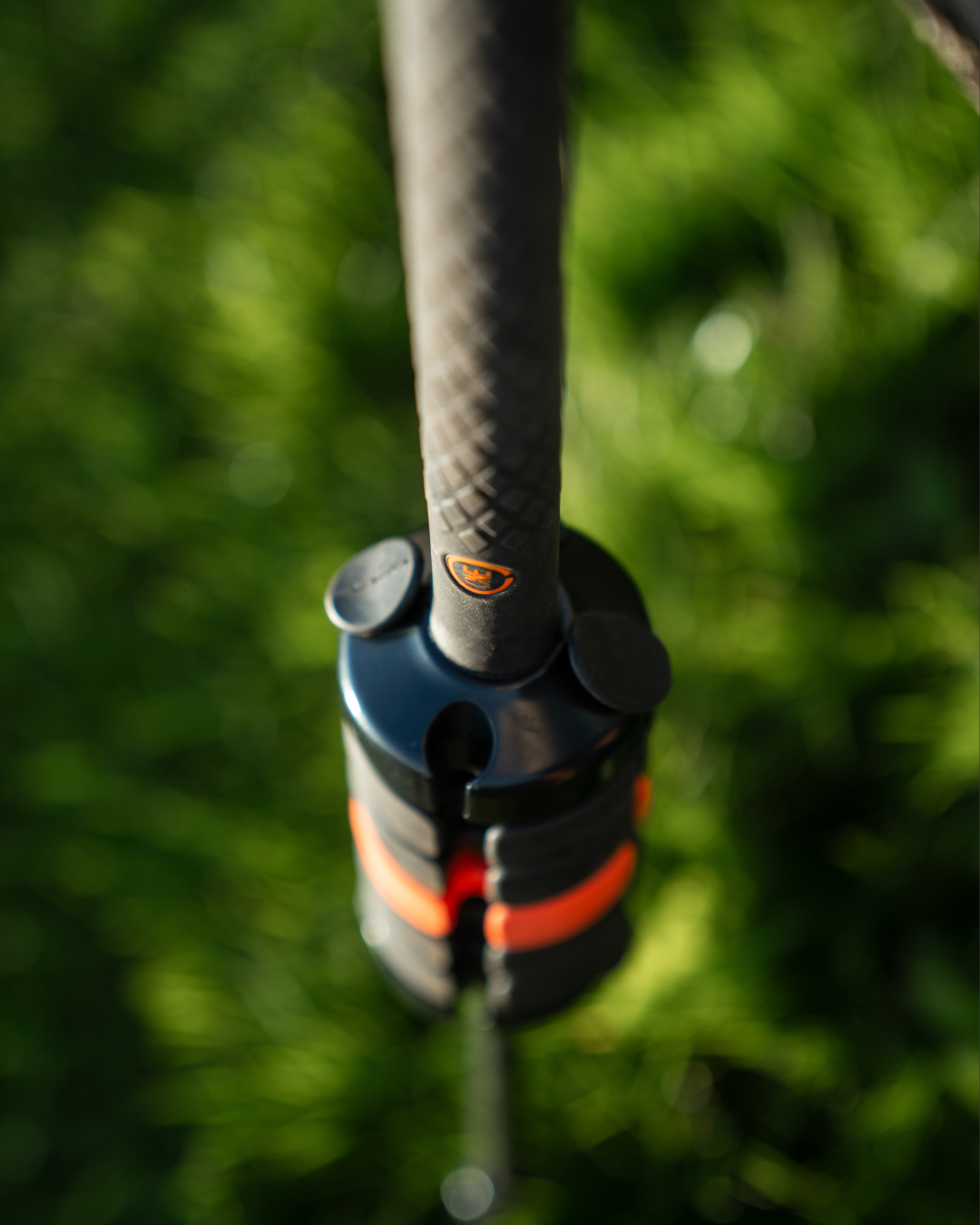
A weighted swing trainer with adjustable weights, like the ONE Club Trainer, lets you do the overload part of this work without buying many clubs. The swap-in weight system means you can run the heavy-medium-light steps with one tool. That makes the home setup much simpler.
What equipment actually matters
You don't need a gym membership or a launch monitor to run this program well, though both help. The bare minimum gear list: a pair of dumbbells (15 to 50 pounds based on strength level), a medicine ball (10 to 14 pounds), a resistance band, a yoga mat, and either a weighted swing trainer or a heavy practice club for the speed phase.
Nice-to-have gear: a launch monitor like a SkyTrak or Garmin R10 to track speed and ball speed at home, an alignment-stick set for drills, and a foam roller for recovery. Total cost for the extras is under $1,500. That's about a year of lessons, and it pays back across many seasons.
How to test progress without a launch monitor
Most amateurs don't own a launch monitor, but you can still track progress. Three simple tests: max carry with a 7-iron (test at the range every two weeks, average of 10 swings), grip strength with a hand dynamometer (cheap on Amazon, lines up well with clubhead speed), and side-plank time per side (a stand-in for core stability, which caps speed for many amateurs).
Track each one at week 0, week 4, week 8, and week 12. If carry with the 7-iron is up by 5 yards or more by week 12, the program is working. If grip strength is up 10 percent and side-plank time is up 30 seconds, the body has shifted the way you want.
Common mistakes that derail speed training
Three mistakes stall more speed programs than any others. The first: skipping the mobility phase. Amateurs want to get to the "real" work, so they start with strength or overspeed and never build the base. The second: too much volume. More is not better in speed work. Three sessions a week of sharp, full-effort work beats five sessions of so-so work, every time. The third: not tuning the program for age and recovery. A 25-year-old can recover faster than a 50-year-old. The plan stays the same; the volume scales down.
The other quiet killer: poor sleep. Speed training stresses the central nervous system. That system rebuilds during sleep. Players who train hard and sleep six hours a night plateau fast. Players who train the same volume and sleep eight hours keep gaining for months. Sleep is the single most under-rated piece of any speed program.
Maintaining speed gains over the long term
Once the 12 weeks are done, the next question is how to hold the gains across the season. The upkeep plan is simple: one strength session a week, one overspeed session a week, and daily mobility work cut to 10 minutes instead of 15. Total time drops from about five hours a week during the program to about two hours a week for upkeep.
Most amateurs lose 20 to 40 percent of their speed gains within three to four months when they skip an upkeep plan. With the routine above, the same players hold 80 to 90 percent of their gains through the full season. Then they push higher the next off-season. The compound effect across many seasons is what builds the 10 to 15 mph jumps players sometimes report over a few years of steady work.
Golf swing speed training questions
How much swing speed can an average amateur gain?
Three to seven mph of clubhead speed over a 12-week program is the real range for most amateurs. That's 8 to 18 yards of extra carry off the tee, based on contact and launch. Older or less-trained players tend toward the low end of that range. Younger or sportier players land at the high end.
How long until I see speed gains?
Most amateurs notice the first change at week 6 or 7. The bigger gains come in the back half of the program. Weeks 10 to 12 are the best window, when overspeed work hits full tilt. Don't expect big gains in the first few weeks. The base work has to be there before the speed shows up.
Is golf swing speed training safe for older players?
Yes, with tweaks. Players over 50 should cut total volume by about 25 percent and add more rest days between sessions. The mobility phase matters even more. It often runs six weeks instead of four. With those tweaks, players in their 50s and 60s see 2 to 5 mph gains. That's still real distance.
Do I need a swing trainer to get faster?
Not strictly. A weighted tool like the ONE Club Trainer makes the overspeed phase easier at home, since the adjustable weights cover overload and underload work in one device. But a heavy practice club and a light broom handle can fill in. The plan and the daily habit matter more than the gear.