
You can boost your golf swing speed by 3 to 5 mph in four weeks with three specific changes to how you play golf: a wider, more athletic stance that lets the lower body actually push the ground, a longer backswing that completes the shoulder turn behind the ball, and an overspeed routine three times a week. Each change targets a different part of the speed equation. Setup creates the foundation for force. The longer backswing creates the loaded position for power release and proper sequencing through impact. Overspeed work trains the nervous system to fire faster. These aren't tour-level secrets. They're the three quick wins I run with every new golfer who walks onto the lesson tee asking for more distance in their golf game. Speed training that follows this structure produces measurable change for almost every amateur golfer within a single month.
This guide walks through each of the three quick wins in detail, the equipment that helps, what realistic results look like over four weeks, and the common mistakes that derail boost-the-speed projects. It closes with the questions golfers ask most about adding speed without rebuilding their swing.

Why the quick wins actually work
Quick speed gains usually come from removing constraints rather than adding effort. Most amateurs have one or two specific physical or mechanical constraints leaking speed, and once those constraints are removed, the speed shows up almost immediately. The constraints I see most often: a narrow stance that prevents ground-force production, a short backswing that doesn't load the body, and a nervous system that's been trained at the same golf swing speed for so long it's forgotten how to fire faster. Cleaning up these three swing mechanics is what unlocks the speed already sitting in the body.
Fixing those three doesn't require a 12-week strength program. It requires four weeks of focused work on specific changes. TrackMan's swing-data archive backs this up. The biggest factor separating fast-swinging and slow-swinging amateurs at the same skill level isn't fitness. It's setup and sequence. The best way to increase swing speed for most weekend players is to copy what elite players do at address and at the top, then let the body fill in the rest.
Quick win 1: Widen and athletic your stance
Most amateurs set up too narrow for the club they're swinging. A narrow stance limits how much the lower body can rotate, which limits the force the body can transmit to the club. Wider doesn't mean splayed out. It means shoulder-width apart for a 7-iron, slightly wider for the driver, with weight balanced between the heels and the balls of the feet. The lower body should feel athletic, ready to push the ground.
The tell that your stance is too narrow: your finish wobbles. If you struggle to hold your finish pose for two seconds without rocking back, the stance was too narrow at address and the body never got fully grounded. Widen by about two inches and the finish often steadies up the same session.
Quick win 2: Complete the shoulder turn
The single biggest source of "lost" speed in amateur golf is an incomplete backswing. Most amateurs stop turning the shoulders at about 70 percent and finish the backswing with the arms. That position leaves no torque stored in the body, so the downswing has to manufacture speed with arms-only. The fix: extend the backswing until the lead shoulder is behind the ball at the top. For most amateurs, that feels like 20 percent more turn than they think they need.
A simple drill: at the top of your backswing, freeze and check whether your lead shoulder is behind the ball line. If not, turn more. Hit 30 balls focused only on this and you'll feel the difference in clubhead speed by the end of the training session. The longer backswing also slows the tempo, which gives the downswing more time to sequence properly, and you'll often drive the ball ten or fifteen yards farther without any extra effort.
Quick win 3: Add overspeed work three times a week
This is the fastest single change you can make if you've already got the setup and backswing in good shape. Three 15-minute overspeed sessions a week, run with progressive overload and underload, produces 2 to 4 mph of clubhead speed gain in four weeks for most amateurs. The protocol: 10 swings with a lighter stick at maximum effort, 10 with a normal-weight stick, 10 with a heavier stick. Rest 30 seconds between sets.
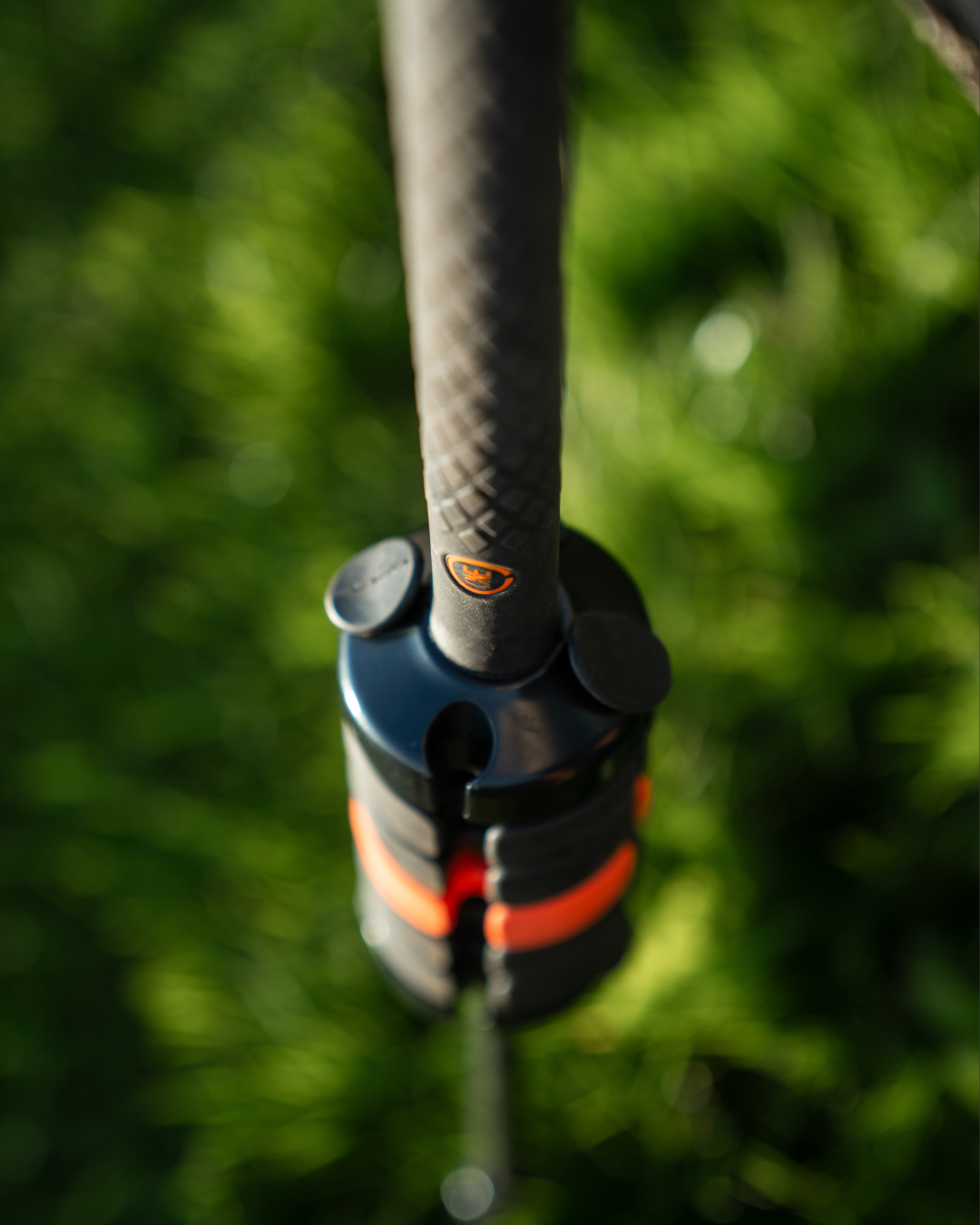
A weighted swing trainer like the ONE Club Trainer is built specifically for this kind of work because the interchangeable weights cover the overload portion of the routine in a single tool. Training aids like this also force honest mechanics: a swing that breaks down under load is obviously off. Many golfers I work with report measurable speed gains by week three, and the carryover to a normal iron or driver swing shows up almost immediately once they swing the club at full effort with grip pressure that stays light through the follow-through.
Realistic results over four weeks
Week one usually feels like more work than reward. The wider stance feels unstable. The longer backswing feels weird. The overspeed work creates muscle soreness in places you didn't know you used. By the end of week two, the new positions feel more natural and the body starts producing the speed at impact it always had access to but couldn't deliver. This is when the average golfer starts to actually swing faster without trying to swing as hard.
Weeks three and four are where the speed gains compound. Most amateurs see 3 to 5 mph of clubhead speed gain by the end of week four, which translates to 8 to 12 yards of carry distance off the tee. If you've also fixed alignment and grip during the same period, the gains can be larger because the contact quality improves alongside the speed. A 5 mph speed gain with cleaner contact is often a 15-yard distance jump, and it carries straight into approach shots when you hit the ball flush at the moment of impact.
Common mistakes that derail the quick wins
Three mistakes derail more of these projects than anything else. The first: overdoing the overspeed work. More than three sessions a week, or more than 30 swings per session, fatigues the nervous system and groves bad mechanics. The second: trying to add all three changes at once. The body learns motor patterns one at a time. Add the wider stance first, then the longer backswing, then the overspeed work, with about a week between each change. The third: skipping the warm-up routine before overspeed sessions. The nervous system needs to be primed before being asked to fire at maximum, and a five-minute mobility flow that opens range of motion through the hips and shoulders does the job.
The quietest mistake: not measuring. Without a launch monitor at home, track progress with a simple proxy: maximum carry distance with a 7-iron, tested every two weeks at the range. If carry distance is climbing, the program is working. If it's flat after three weeks, something in the program needs adjusting.
How to keep the gains once you've got them
Four weeks of focused work builds the gains. Two weeks of slack work loses them. The maintenance routine: one overspeed session a week (down from three), one strength session for the lower body, and the wider stance becomes your default address. Total maintenance time, about 90 minutes a week, holds 80 percent of the gains across a full season.
The other maintenance tool: short-game work. Once driver speed is up, leaving 15 birdie putts a round wastes the gains. A 30-minute short-game block twice a week converts the new distance into actual scoring improvement. The pros do this religiously for a reason. Every golfer who picks up speed should pair it with golf course practice. Knowing how to use the extra yards on real holes is where the score actually drops, not on the range. To increase swing speed is one thing, but to convert it into lower scores requires the short game to keep pace.
Plan a session every two weeks at your home golf club to test the new speed under real-round conditions. The difference between range speed and course speed often surprises players. The course adds pressure, lies vary, and the mental game enters. Players who only test their new speed on the range often leave half the gain on the course because they never practiced delivering it under any pressure at all.
Boost golf swing speed questions
How much golf swing speed can I boost in four weeks?
Most amateurs see 3 to 5 mph of clubhead speed gain in four weeks of focused work on the three quick wins above. That translates to about 8 to 12 yards off the tee. Players who haven't done speed work before tend to gain at the higher end of that range; players who've already done some speed work tend to gain at the lower end.
Do I need a launch monitor to track swing speed boosts?
Not strictly. A simple proxy works well: maximum carry distance with a 7-iron, tested every two weeks at the range with an average of 10 swings. If carry distance is climbing, your clubhead speed is climbing. If you want exact numbers, basic launch monitors like the Garmin R10 or SkyTrak Plus cost under $700 and measure speed and ball speed reliably at home.
Can older players still boost swing speed?
Yes. Players over 50 typically gain 2 to 4 mph instead of 3 to 5, but the gains are real and sustainable. The adjustment for older players: reduce overspeed volume by about 30 percent and add a full rest day between sessions. The slower recovery curve is the main constraint, not the body's ability to actually adapt.
What's the fastest way to boost swing speed?
Overspeed work with a weighted training tool produces the fastest measurable change for most amateurs. Three 15-minute sessions a week, paired with a wider stance and completed shoulder turn, will move the needle inside three to four weeks. A tool like the ONE Club Trainer makes the overspeed portion easier to run at home because the adjustable weights cover the full overload-underload spectrum.