The best golf training aids for the average amateur, ranked by what actually moves the needle, are putting aids first, then alignment aids, then weighted and speed trainers, then impact aids, then swing-plane aids, with grip trainers bringing up the rear. That order surprises a lot of my students, because the magazines always lead with swing gadgets. But putting accounts for roughly 40 percent of strokes in a typical round, and a 17-handicap who shaves three putts off the average is a 14-handicap by Sunday afternoon. I have been coaching in southern Ontario since 2008, and I have watched players spend $400 on a swing-plane contraption that ends up in the garage by July while a $25 PuttOut Pressure Trainer quietly drops their scores.
What follows is a category-by-category ranking with two or three examples in each bucket, an honest read on cost versus effectiveness, and the drills I use with players on the lesson tee. No affiliate hype. Just the gear that earns its spot.
Why golf training aids matter for the average amateur
Most golfers I see practice the wrong things. They beat drivers on the range for an hour, hit maybe four putts before the round, and wonder why they shoot 92. A good training aid forces feedback you cannot fake. You either roll the ball over the gate or you do not. You either hit the strike strip or you fat one. That instant signal is what builds skill, because the brain only learns when it knows it was wrong.
The catch is that most golf training aids on the market are gadgets dressed up as tools. They look clever, they photograph well, and they do nothing your eyes and a $3 chalk line could not do. The trick is knowing which category solves a real problem for your handicap and which one is shelf candy. According to Mark Broadie's strokes-gained framework, popularized in his book Every Shot Counts, amateurs leak strokes disproportionately on and around the green, so the smartest spend follows the data. You can read the methodology straight from the source at Mark Broadie's research site.
Category 1: Putting aids (best ROI for the average amateur)
Putting aids win the ranking because the surface area of the problem is enormous and the fixes are mechanical, not athletic. You do not need to be fit or flexible to make more six-footers. You just need better aim, a square face at impact, and a stroke that does not wobble.
The three I keep in my coaching kit are the PuttOut Pressure Putt Trainer (about $30), the EyeLine Putting Mirror (around $40), and the Pelz Putting Tutor (about $60). The PuttOut gives you a ramp that returns the ball the same distance it would have rolled past the hole, so a good stroke comes back to your feet and a flubbed one rolls a foot short. That is honest feedback for nothing. The EyeLine Putting Mirror sits on the green and shows you eye line, shoulder alignment, and ball position in one glance, which fixes about 70 percent of the setup faults I see. The Pelz Tutor uses two ball-bearings the ball must roll between, and if your face is even a degree off at impact the ball clips the rail. Brutal little device. Worth every penny.
Effectiveness: very high. Cost: low to moderate. If you have $100 to spend on improvement and a 15 handicap, spend $30 on a PuttOut, $40 on a mirror, and put the rest toward a lesson. Your scores will drop faster than any full-swing aid can manage. Years of golf instruction coverage confirms it: putting aids are the cheapest stroke savers in the game.
Category 2: Alignment aids (close second, almost free)
Alignment aids land second because they fix a hidden problem cheaply. The players I see at the range are almost never aimed where they think they are aimed. Closed shoulders, open feet, and a target line that points 20 yards right of the flag is the standard amateur setup. A simple pair of alignment sticks fixes most of it.
The two products to know are the Callaway Alignment Stix (about $20 for the pair) and the Tour Aim 2.0 (around $80). The Callaway sticks are fiberglass rods you lay on the ground, one on your toe line, one on the target line. That is it. The Tour Aim 2.0 adds a visual frame so you can check posture and stance width at a glance, and MyGolfSpy gave it a strong nod in their alignment-tools coverage at MyGolfSpy's gear reviews. If you want a deeper drill, drop one stick on the ground pointing at your target, drop a second parallel to it for your toes, then hit ten wedges. Your face will square up within a bucket.
Effectiveness: high. Cost: very low. There is no excuse for not owning a $20 set of alignment sticks if you play more than ten rounds a year. Every PGA Tour pro uses them in warm-up. According to TrackMan's swing-data archive, face-to-path is the biggest determinant of curvature, and your face follows where you aim it, so getting the aim right is half the battle. You can see TrackMan's data write-ups at TrackMan's swing-data blog.
Category 3: Weighted clubs and speed trainers
Speed training has moved from gimmick to mainstream over the past decade, and it earns the bronze in this ranking. The science is solid. Swing a club that is 20 percent heavier than your driver and a club that is 10 percent lighter, alternating, three sessions a week, and you will gain measurable clubhead speed in about six weeks. Distance gains follow.
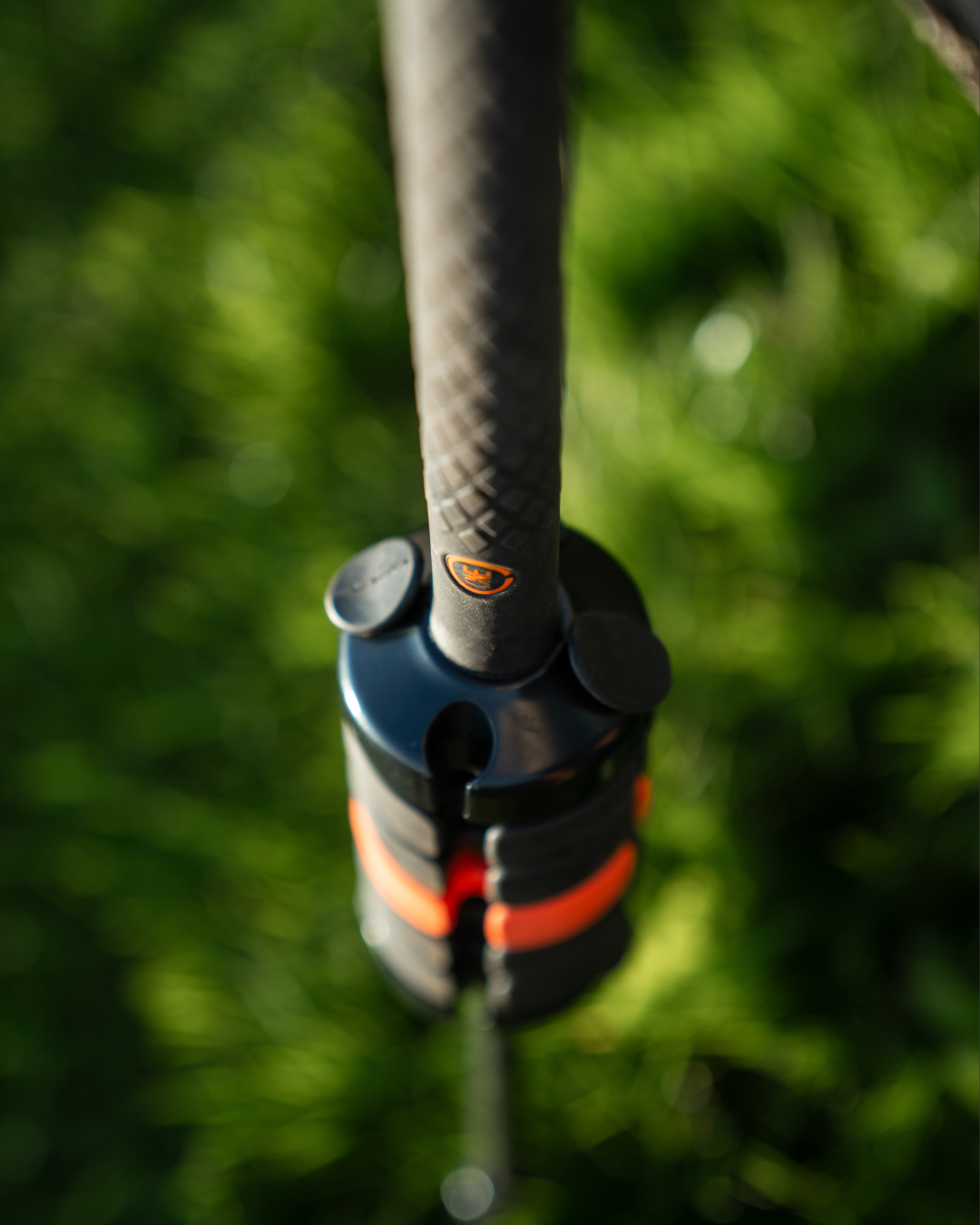
The two heavy hitters here are the SuperSpeed Golf system (about $200 for the three-club set) and the ONE Club Trainer, a weighted training club used for both speed and tempo work. SuperSpeed has the deepest research backing, with their protocol explained at SuperSpeed Golf's training science page, and most of the tour players on the strength side of the game use some version of overspeed protocol. A weighted swing trainer like the ONE Club Trainer is useful here because the added load punishes any rushed transition, which is exactly the move that costs amateurs distance and accuracy. The Orange Whip sits in the same neighborhood at about $110, leaning more toward tempo than pure speed, and it has a loyal following for warm-ups.
Effectiveness: moderate to high for golfers who actually do the work. Cost: moderate to high. The honest caveat is that speed training is a regimen, not a one-time fix. If you swing the heavy stick twice and quit, nothing happens. Six weeks of consistent reps is the floor. The Titleist Performance Institute has good background on why speed training only works alongside mobility and stability work, and their library is open at the TPI research library.
Category 4: Impact aids
Impact aids are the most underrated category on this list. They land fourth only because the gains take longer to show up on the scorecard, but the long-term effect on ball striking is significant. The whole point is to teach the body what a compressed strike feels like, which is something most amateurs have literally never experienced.
The three I rotate through are the Tour Striker Smart Ball (about $30), the SKLZ Smash Bag impact bag (around $35), and the DivotBoard (about $90). The Smart Ball clips between your forearms and forces the lead arm to stay connected through the strike, which kills the chicken-wing follow-through that haunts the 18-handicap golfer. The impact bag is a sand-filled cushion you hit with a half swing, and it teaches a forward shaft lean at impact better than any video lesson I have given. The DivotBoard shows you exactly where your low point is on every swing, which is gold for low point control. If you cannot strike the ball before the turf, you cannot compress an iron, and no amount of new clubs will fix it.
Effectiveness: high for ball striking. Cost: low to moderate. The catch is patience. These tools rewire feel, and feel takes weeks. I tell my students to commit to ten minutes a day with an impact bag for a month before judging it.
Category 5: Swing-plane aids
Swing-plane aids land fifth because they over-promise and under-deliver for the average amateur. The marketing makes you think strapping a contraption to your arms will fix your slice forever. The reality is that swing path is downstream of grip, setup, takeaway, and pressure shift, and if those four are off, no plane harness will save you.
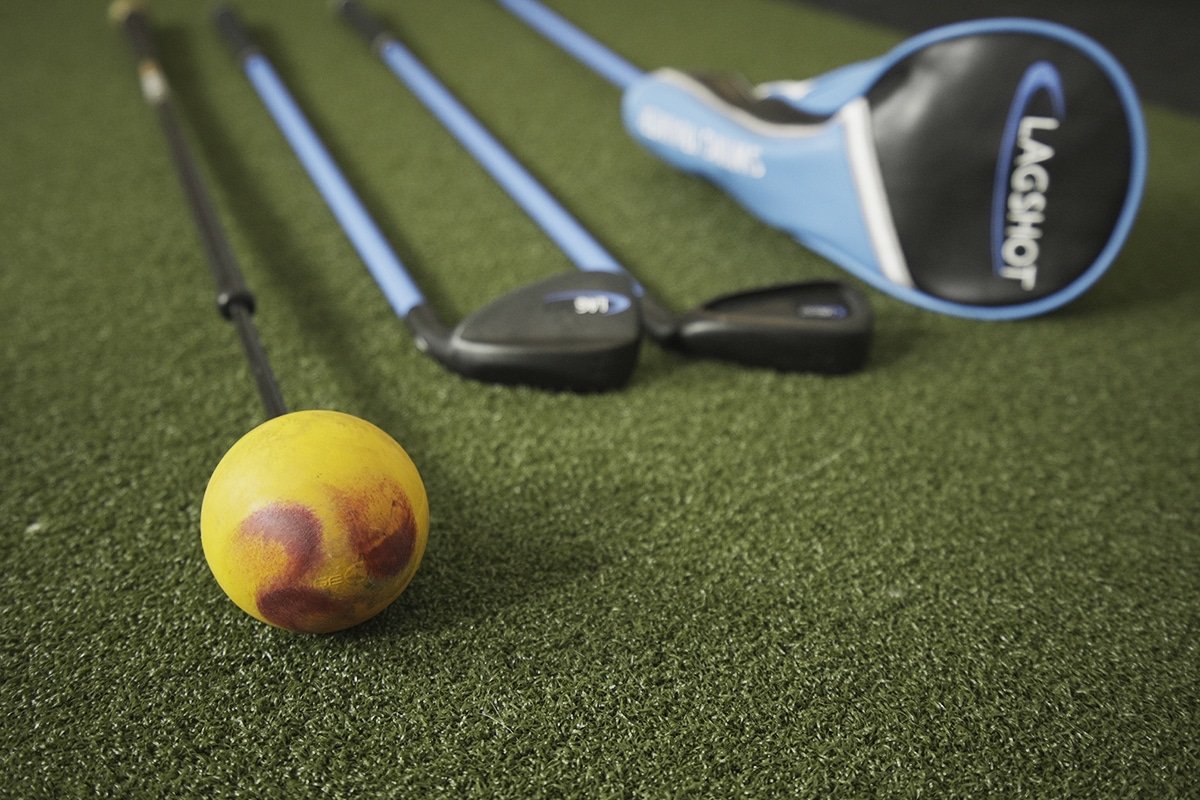
The two worth a mention are the Lag Shot trainer (about $130) and the Planeswing system (north of $400). The Lag Shot has a noodle-soft shaft that punishes any casting move and rewards a real transition, which is genuinely useful for tempo. The Planeswing is a metal hoop you swing inside, and while it works, you can get 80 percent of the same feel from a goalpost drill with two alignment sticks for free. The Tour Striker Educator clips on the shaft, gives you a real strike position cue, and earns its spot for under $50.
Effectiveness: moderate, and inconsistent across players. Cost: moderate to high. My honest take is that most amateurs are better off spending the $400 on six lessons with a teaching pro than on a hoop. Wrist mechanics drive the plane far more than the plane drives the wrists, and that is something a coach can see and fix in person.
Category 6: Grip trainers
Grip trainers come last because the fix is cheaper as a knowledge problem than a hardware problem. A teaching pro can fix your grip in 90 seconds. A $20 molded grip aid will teach the same lesson if no pro is nearby, but once you learn it the device gathers dust.
The SKLZ Golf Grip Trainer is the standard at about $15, and it slides onto a club and forms your hands into a neutral grip. The PURE Truth Trainer adds a sensor and an app for around $200, which is overkill for a grip problem. Pick the cheap one, use it for a month, and donate it to a junior program.
Effectiveness: high if you have a true grip fault, low if you do not. Cost: very low. Save the gadget money for the categories above.
How to choose a training aid that actually fits your game
Identify your worst category by strokes gained, not by feel. Count your putts for five rounds, your penalty strokes, and your number of greens hit. Putt count over 34 means putting aid first. Penalty strokes from slices means alignment work plus a video lesson, not a swing-plane gadget. Greens-hit number under five out of 18 means ball striking, which is impact aids and a wedge or iron fitting.
Resist the urge to buy the popular golf training aids you see on social media. The Orange Whip is good for tempo. The Tour Striker Smart Ball is good for connection. Match the tool to your fault, not your feed.
Best golf training aids questions
Are golf training aids worth the money?
The best ones absolutely are, and the worst ones are a waste. Putting aids and alignment sticks earn their price back in lower scores within a single season for nearly every amateur. Speed trainers pay off if you actually do the regimen. Anything that promises a magic fix without practice sessions is shelf candy.
What is the best training aid for beginners?
A pair of alignment sticks and a PuttOut Pressure Putt Trainer. Total cost under $50. They teach the two skills, aim and a square putter face, that beginners need most. Skip the swing harnesses until you have a repeatable setup.
Can golf training aids really lower my scores?
Yes, when matched to the right fault. A golfer who three-putts five times a round and adds a putting mirror plus a daily ten-minute drill will drop two to three strokes inside six weeks. The aid does not lower the score. The repetitions the aid forces you to do correctly are what lower the score.
Can I use my golf training aids inside?
Most of them, yes. Putting aids, grip trainers, impact bags, weighted clubs for slow swings, and alignment mirrors all work in a basement or garage. Anything that involves a full swing with a real ball needs a net or the range. Indoor reps in winter is how Canadian golfers like me keep their swing alive from November to April.
Do professional golfers use training aids?
Constantly. Every PGA Tour bag has alignment sticks. Many tour pros use the Tour Striker Educator, the Stack System for speed, and a putting mirror in pre-round warm-up. The difference is that pros pair the tool with a real practice plan and a coach watching the result, which is exactly what amateurs should copy.
How often should I use golf training aids?
Short, frequent sessions beat long ones. Ten minutes a day with a putting aid will outperform an hour a week. Speed training should be three sessions a week, never daily, to allow recovery. Alignment work should be part of every range session, full stop.
The best golf training aids are the ones that match your weakest skill, give honest feedback, and fit into a routine you will actually stick to. Rank your faults first, then rank the gear. Buy the boring tools before the flashy ones. Your scorecard will thank you in about six weeks.