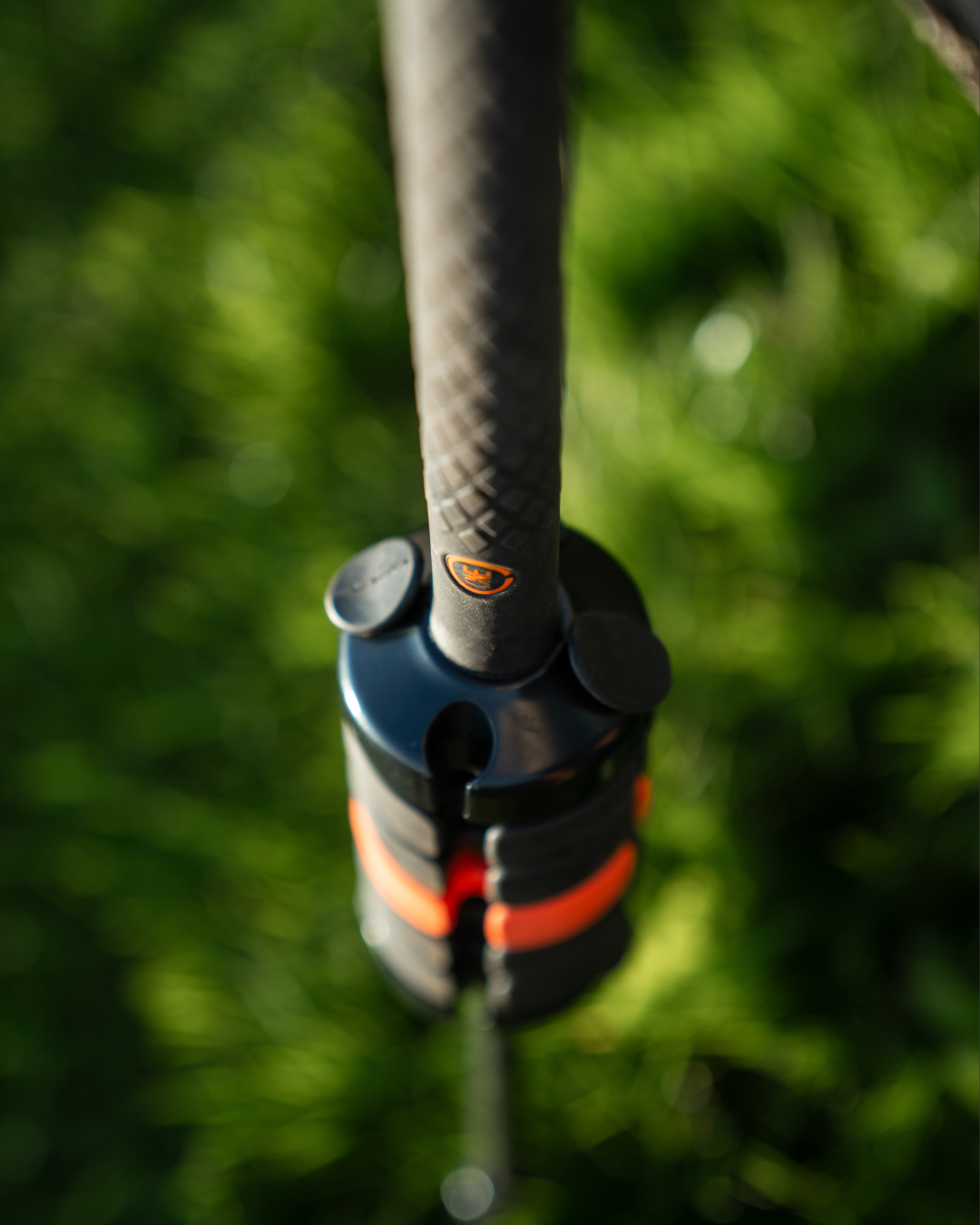

The best golf swing training aids are the ones built for a single piece of the swing, not the whole motion at once. After more than two decades on the lesson tee in Quebec and Ontario, I have watched players burn good money on gadgets that promise a complete rebuild and deliver nothing. The aids that move handicaps down are narrow tools. A grip trainer fixes the hold. A plane stick fixes the takeaway. A weighted club fixes the transition. Each one targets a specific link in the chain.
This guide walks through the swing from address to finish and matches a training aid to every checkpoint along the way. You will see what I use for grip, takeaway and swing plane, top-of-backswing position, tempo and transition, release through impact, and the finish itself.
Why a swing-mechanic approach beats buying by category
Most lists rank golf training aids by purpose, like "best for putting" or "best for tempo." That is fine for shopping, but it is a poor way to actually improve. The swing is a sequence. Grip feeds takeaway. Takeaway feeds top position. Top position feeds transition. A player buys a swing speed radar, gains 4 mph, and still hits the same weak fade because his right elbow flares at the top.
Identify the broken link, then buy the aid that fixes that link. Per Titleist Performance Institute's research on the kinematic sequence, the body fires in a specific order from the ground up, and breaking that order is what produces inconsistency at impact. (mytpi.com)
Grip aids: fix the hold before anything else
Start with the hands. Every golf training aid in the world is useless if your grip is wrong, because the clubface is controlled by the hands and the hands alone. I drill this into every new player on day one. A grip trainer is a molded rubber attachment that slides onto the butt of a club and forces the fingers into a neutral position. SKLZ makes one. Lamkin makes one. Both cost under twenty dollars. They are not glamorous, and that is precisely why they work.
The way I use them with students is simple. Step one: put the trainer on a 7 iron. Step two: hit twenty balls off a mat at half speed, feeling where the grip sits in the fingers versus the palm. Step three: take the trainer off, hit twenty more balls, and try to match the feel. Within a week most players have rebuilt their hold without consciously thinking about it. That is the goal of any good golf training aid. Build the feel, then take the trainer off and play.
Wrist-set trainers
Once the grip is set, the next piece is the wrists. The HackMotion sensor straps to the lead wrist and gives live data on flexion, extension, and rotation through the swing. HackMotion's instructional library shows that tour players keep the lead wrist flat or slightly bowed at the top, while amateurs tend to cup the wrist and open the clubface. (hackmotion.com) For players without budget for a sensor, a wristlock band like the Tour Striker Smart Glove does the same job for around fifty dollars. Both teach the same lesson. The wrist controls the clubface, and the clubface controls the ball.
Takeaway and swing plane aids
Once the grip and wrists are sorted, we move to the first 24 inches of the backswing. This is where most amateur swings break down. The hands roll inside, the clubface opens, and the rest of the swing is a recovery effort from there. The simplest training aid in golf, the alignment stick, fixes more takeaway problems than any expensive gadget on the market. A pair of Callaway or SKLZ alignment sticks runs about fifteen dollars.
I lay one stick on the ground along the target line, set another stick across the toe line, and have the student rehearse the takeaway with the clubhead tracking parallel to those sticks. For swing plane work, the Tour Aim 2.0 and the Swing Align are useful. The Swing Align in particular straps across the forearms and forces the chest and arms to move together through the takeaway, which kills the early hand roll that produces a flat plane and a hook. From years on the lesson tee, I have found that no other category of golf swing training aid produces a faster visible change than a takeaway fix with alignment sticks plus a connection band.
Plane boards and pool noodles
For players who get steep or under-plane on the way down, the Pure Strike Plane Board or even a cheap pool noodle stuck on an alignment stick gives an instant feedback frame. If the club hits the noodle on the way back or down, the swing is off plane. According to TrackMan's swing-data archive, every degree of club path mismatch with face angle costs roughly four yards of accuracy at driver length, so plane work is not cosmetic. (blog.trackmangolf.com) It is dollars on the scorecard.
Top-of-backswing aids
The top of the backswing is where the swing either loads correctly or collapses. Two faults dominate. The lead arm bends and the club crosses the line, or the right elbow flies and the club drops under plane. The Swing Jacket and the Lag Shot 7 iron are the two aids I reach for here. The Swing Jacket is a wearable harness that physically holds the arms in the correct relationship to the chest, so when you reach the top the position is structurally correct. It is bulky, but it works in fifteen-minute doses.
The Lag Shot is a club with a deliberately whippy shaft. When you swing it correctly, the shaft loads at the top and the head lags behind the hands on the way down. When you swing it wrong, the timing falls apart and you can feel it. For golfers chasing more lag and a fuller top position, this is one of the best products in its price range, around a hundred dollars. I keep one in my teaching bag and use it as a warm-up tool before lessons.
Mirror work
I am also a believer in the cheapest training aid of all, a full-length mirror. Stand in front of one, swing to the top in slow motion, and check whether the lead arm is straight, the club is parallel to the target line, and the clubface matches the lead forearm angle. Free, durable, and surprisingly effective when used three times a week.
Tempo and transition aids
Transition is where most amateurs throw the swing away. The hands fire from the top, the lower body stalls, and the club casts. A tempo trainer fixes this by making it physically impossible to rush. The Orange Whip is the classic. It is a weighted flexible shaft with a heavy head, and you cannot swing it fast without losing balance. SuperSpeed's training protocol also targets transition tempo through overspeed work, where lighter sticks teach the body to fire in the correct order before you load up with a heavy club. (superspeedgolf.com)
A weighted swing trainer like the ONE Club Trainer fits in the same category. The added load punishes any rushed transition because the club simply will not move if you try to throw it from the top. You learn, by feel, to let the lower body lead and the hands follow. Ten swings before a range session is plenty. I tell my students to think of it like a metronome made of steel. It sets the rhythm, then you put it down and let the rhythm carry into your real clubs.
Audible tempo tools
For golfers who learn by ear, the Tour Tempo app and the Golf Smart Ball trainer give beeps or clicks at specific intervals. The standard tour ratio is roughly 3-to-1, meaning the backswing takes three times as long as the downswing. Most amateurs swing closer to 2-to-1 because they rush the start down. A few weeks with an audio cue rewires that timing without you having to think about it.
Release and impact aids
Impact is where the swing pays off, and it is also where amateurs lose the most strokes. The two faults are a flipped release with the lead wrist breaking down, and a chunked strike from poor low point control. The Impact Bag is the cheapest fix for both. It is a vinyl bag stuffed with rags or filler, and you hit it with a 7 iron at three-quarter speed. The bag will not move unless your hands are ahead of the clubhead at contact, so you get instant feedback on shaft lean.
For low point control, the Divot Board has changed how I teach iron play. It is a plastic board that shows the exact location of your low point after every swing through a colored strip. Hit behind the ball and the strip shows it. Hit ahead and the strip shows it too. Combined with a short alignment stick laid across the target line, this is the best ball striking drill for under fifty dollars that I have ever used. The Tour Striker iron, which has no clubface on the bottom third, forces the same lesson by punishing any swing that does not strike ball before turf.
Pressure and stability aids
The Force Pedal trainer measures ground reaction force and shows whether the player is shifting pressure correctly into the lead side at impact. Per Golf.com's instruction archive, lead-side pressure at impact is one of the strongest predictors of compression and distance in iron play. (golf.com) The Stability Mat from BirdieBall offers a cheaper alternative. It tells you whether your stance is balanced through the swing without needing a sensor.
Finish-position aids
A good finish is a mirror of a good swing. If you cannot hold a balanced finish facing the target with the chest over the lead leg, something earlier in the swing broke down. The Balance Disc from SKLZ does the job. Stand on it through the swing and you cannot finish in balance unless your sequence was correct. It is a perfect indoor training tool for winter.
The other tool I use here is video, recorded from face-on at hip height. Stand the phone on a small tripod, swing, and watch the finish. Are you over your lead leg? Is the chest facing the target? If any of those answers is no, the chain broke somewhere earlier. Most of the players I see at the range never use it, and most of them never break ninety either.
Indoor versus outdoor training aids
Most of these aids work indoors with a hitting mat and a net. Grip trainers, wrist sensors, alignment sticks, mirrors, impact bags, balance discs, and tempo whips run perfectly in a garage or basement. The ones that need open space are speed sticks at full tilt and plane boards. For winter players in Canada, you can keep a real swing-improvement regimen running in 200 square feet, which is what I do from November to April.
Are golf training aids worth the money?
Honest answer from a coach: sometimes yes, sometimes no. The aids worth buying are the ones with a single job and clear feedback. Grip trainers, alignment sticks, impact bags, tempo whips, divot boards, and balance discs all fit that test. The aids that are not worth the money are the all-in-one harnesses that promise to fix the entire swing through a single rigid contraption. Bodies are different. Swings are different. Any aid that locks you into one shape will not work for most players.
The bigger principle is this. A training aid is a teacher, not a coach. It can correct one fault in one session. It cannot diagnose, sequence the work, or hold you accountable. Spend twenty minutes with a PGA or PGA of Canada professional, learn what your actual swing fault is, then buy the one aid that targets it. That is how to spend money on golf training aids without wasting it.
best golf swing training aids questions
What is the best training aid for beginners?
A grip trainer and a set of alignment sticks. Total cost under thirty dollars. The grip trainer locks in a neutral hold, and the alignment sticks build a feel for target line, ball position, and swing path. Until those two pieces are solid, no other golf swing aid will help.
What golf training aids do professional golfers use?
Most tour pros use the Orange Whip for warm-up, the SuperSpeed sticks or The Stack System for speed training, HackMotion for wrist data, and TrackMan or a similar swing speed radar for shot data. Many keep a Tour Striker iron in the bag for short game practice and ball striking drills. The setup is simple, and the same tools are available to amateurs.
Can golf training aids really lower my scores?
Yes, when matched correctly to a specific fault. A divot board that fixes low point control alone is worth two or three strokes a round for most mid-handicappers. A tempo trainer that calms a rushed transition can save another two. The cumulative effect of three well-chosen aids working on real weaknesses is measurable in a season.
How often should I use golf training aids?
Short, frequent sessions beat long ones. Fifteen minutes four times a week with one focused aid will build muscle memory faster than two hours on a Saturday. The brain consolidates motor patterns during sleep, so spreading the work across days matters more than total minutes.
Can I use my golf swing training aids inside?
Most of them, yes. Grip trainers, alignment sticks, mirrors, balance discs, tempo whips, impact bags, and wrist sensors all work in a garage, basement, or living room with a few feet of clearance. Plane boards and speed sticks need more space. I tell my northern students to set up a 4-by-8 foot training area at home and they can keep their swing alive through any winter.